Showing posts with label Election 2011. Show all posts

Wednesday, May 11, 2011

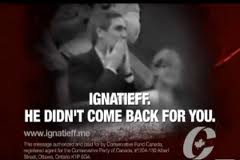
Micheal Ignatieff In Retrospect


In a recent column, Kate Heartsfeld recounts an incident which occurred less than a week after the election:

Five days after the federal election, I was sitting in a car dealership in suburban Ottawa, reading the paper and drinking my watery free coffee. A woman next to me was reading a newspaper, too. At one point, she said to her husband, "I see Iggy's got a teaching job in Toronto." The husband made a listening noise. "He should go back to wherever he came from," the woman continued, bitterly.

It is one of those stories which makes you shake your head. As a grade six student back in Montreal, I read that Ignatieff's father, George, was Canada's Ambassador to the United Nations. Why did this woman not know that? More importantly, what does the anecdote say about us? How can a woman who never visited her riding -- and who vacationed in Vegas during the election -- be elected with such a significant majority of the votes?

Shalini K. Rao -- a Canadian writing in the Harvard Crimson -- sees Ignatieff's defeat as a defeat for traditional Canadian ideals:

Crafted as “elitist,” “insincere,” and “just visiting,” Ignatieff not only had to argue for broad political ideals regarding open democracy—which were oftentimes compromised by Harper’s politics, but he was also forced by his opponents and the media to prove himself as a legitimate candidate. Instead, Ignatieff ought to be thought of as the real icon of what a Canadian looks like; born to a Russian immigrant father and Canadian mother, he worked hard to achieve a world-class education and now stands as a prominent figure in both political thought and academia. Additionally, in his defense of human rights and the protection of democracy, Ignatieff represents the very ideals that Canada prides herself on in the first place.

During the Liberal leadership race in 2005, Ignatieff was not my choice. I argued that Bob Rae was the best politician of the lot. He had served in government and in opposition and would, therefore, make the best Leader of the Opposition. And, I wrote, the Liberal Party needed time to rebuild. I did not expect Stephen Harper to be pathologically partisan. I was wrong.

In retrospect, the Liberal Party has made quite a few mistakes. But to hang them all on Ignatieff is simply unfair. We have become a much different country during Stephen Harper's stewardship. Instead of a country which is open to the world, Rao notes that:

The defeat of Ignatieff and his Liberal Party is, indeed, a sad moment in Canada’s narrative not only for what it signifies politically, but also because it shows a widespread fear of progress. The close-mindedness that grips Canadian politics is manifest in the Opposition that maneuvered itself against Ignatieff for fear that he had spent too much time abroad and learned too much from the world around him. For a country that is stereotyped here in the U.S. as a country that is accepting of everyone and everything, this federal election depicts a Canada that is moving in a steadily more exclusive and narrow direction.

A man with Ignatieff's talents will survive his defeat. What worries me is that the Canada I love may not survive Stephen Harper's triumph.

Sunday, May 08, 2011

Something Wicked


In the same week that Canada's political pundits hailed Stephen Harper's "remaking of the political landscape," -- the week that Micheal Ignatieff resigned as leader of the Liberal Party of Canada and headed to the University of Toronto -- Andrew Coyne recounted a meeting with one of Harper's operatives, a veteran of the Conservative War Room. Obviously proud of his work, he distinguished between the two strategies the Conservatives used in the attack ads which took down Stephane Dion and then Micheal Ignatieff:


They say that we try to portray Ignatieff in our ads and so on as a weak and flailing professor,” the war room staffer said. “No, that’s how we portrayed Dion. Dion was weak, you know, Dion was ‘not a leader.’ We’ve never said Michael Ignatieff isn’t a leader. We’ve never called him weak. And we’ve never called him a flip-flopper. Even when he changes his mind, we don’t say he’s a flip-flopper. Michael Ignatieff, in our narrative, is a political opportunist who is calculating, who will do and say anything to get elected.

“He’s a schemer. When he says one thing and then he changes his mind the next week, it’s not because he’s indecisive and a flip-flopper. It’s because he’s an opportunist who will say different things to different people. I don’t think we’ve even used the phrase, even internally, ‘He’s a malicious human being.’ But that’s kind of the sentiment we’re getting at. With Dion, we were trying to portray him as weak. You can’t trust him to lead us out of the economic recovery because he’s a weak man. With Ignatieff, it’s ‘He’s a bad man,’ right? He’s someone you don’t want your daughter to marry, right?

I bears repeating that the man who hired this Apostle of Sweetness and Light hired Bruce Carson. He smeared Richard Colvin. He fired Linda Keen. And then there is the sad tale of Remy Beauregard. Yet despite all the evidence -- on the public record -- last Monday a majority of Canadians chose to re-elect Stephen Harper for a third time. The difference was that this time they gave him the keys to the car and told him that he could drive it unsupervised.

It was an act of folly which will have tragic consequences. As Shakespeare's three weird sisters warned, "Something wicked this way comes."

Thursday, May 05, 2011

The Mushy Middle?


Those who are hailing the new "clarity" reflected in Monday's election results should read Dan Gardner's column in this morning's Ottawa Citizen. Looking back at the demise of the British Liberal Party, Gardner writes:

Something similar is quite possible here. In a matchup between the Conservatives and NDP, particularly at a time when voter turnout is appallingly low, the electoral math may show that moving to the centre to grab some of the dwindling number of Liberal voters is no longer the smartest option. The more effective strategy may be to identify, engage, and energize the party’s base.

If the government and the opposition begin to define themselves in terms of their differences, the eventual result could be stalemated government. An example, writes Gardiner, is close at hand:

If that sounds impossible, look south. A mountain of research shows that Americans are overwhelmingly clustered in the political middle. Very simply, most Americans are moderate centrists. And yet, American politics is divided and polarized like never before because, in part, the political dynamics reward division and polarization.


Americans seem to have forgotten the strategic advice of the man who led the D-Day Invasion, kept his country out of Vietnam and Suez, and built the Interstate Highway System:


People talk about the middle of the road as though it were unacceptable. Actually, all human problems, excepting morals, come into the gray areas. Things are not all black and white. There have to be compromises. The middle of the road is all of the usable surface. The extremes, right and left, are in the gutters.


As what some see as an historic realignment begins to take shape in Ottawa -- and before more people begin to write the obituary of the Liberal Party of Canada -- they should contemplate both Gardner's and Eisenhower's counsel.

This entry is cross posted at The Moderate Voice.

Tuesday, May 03, 2011

Russell's Nightmare


Canada changed last night. It was a change which voters made consciously and deliberately. In doing so, they ignored the warning of one of Canada's best known constitutional scholars. A week before the election, Peter Russell appeared in what will become a seminal video. "This is the most important federal election in my lifetime," he declared:

What is at stake is nothing less than parliamentary democracy. If the electorate rewards Mr. Harper with a majority, it will mean that he will be able to operate as a presidential prime minister without the check and balance of Congress. It will also mean that two out of five Canadians think very little of the need to hold government accountable to Parliament. Mr. Harper has reduced parliamentary debate to "bickering" and the role of parliament in the formation of government to irrelevant constitutional stuff. I hope and pray that the parties of parliamentarians win a majority next Monday.


Russell warned Canadians that Stephen Harper has absolutely no respect for Canada's constitutional conventions. Retiring Speaker of the House Peter Milliken made the same point when he found the Harper government in contempt of Parliament.

A significant number of Canadians have forgotten that it was respect for those conventions which helped us through some of our most trying times. When Quebec separatists chose the Algerian terrorist model as the way to independence, Rene Levesque moved the cause from planting bombs in mailboxes to seeking legitimacy through ballot boxes. When he lost the 1980 Quebec Referendum, it was Levesque's respect for those conventions which was behind his pledge, "A la prochaine!"

And the next time, when Quebecers voted again on Quebec Independence -- and lost the vote by one half of one percentage point -- they returned to their homes, secure in the knowledge that they still had a voice in the House of Commons through Gilles Duceppe. Respect for those conventions allowed for a party dedicated to the breakup of the country -- a party which, for awhile, served as the Loyal Opposition. It was those conventions which have allowed Canadians, despite their differences, to talk through their problems.

Last night Canadians elected a man who does not talk to his opponents. He demonizes them. He demonized the Bloc Quebecois in 2008, when his decision to cancel vote subsidies -- a decision he made without consulting his caucus -- almost cost him his government. He belittled Stephane Dion and Michael Ignatieff, a man whose international reputation will survive, even in defeat.

Canadians now have the government they deserve. Only a little more than 61% of us cast our ballots -- a result foreshadowed in an earlier Angus Reid Poll. I suspect that -- like voters in Wisconsin, Ohio and Michigan -- it won't be long until voter remorse sets in. But the nightmare has just begun.

This entry is cross posted at The Moderate Voice.

Friday, April 29, 2011

A Failed Prime Minister


Stephen Harper set the bar for success in this election. There were only two choices, he said -- a Conservative Majority or Chaos. No one at this point can accurately predict the outcome of this election. But it would appear that Canadians -- as they do so often -- have chosen an outcome that will fall somewhere in the middle.

There would, indeed, be a certain poetic justice if that outcome was a Liberal - NDP coalition. While I welcome what appears to be NDP growth in Quebec, as a former Quebecer I'm bothered by what Mr. Layton has promised the residents of la belle province. I worry specifically about Layton's pledge to reopen the constitution. As a native Quebecer, Layton surely recognizes the risks of such a gambit. And, for all its faults, the Liberal Party of Canada has always insisted -- to the chagrin of many -- that Quebec be at the centre of the action.

In the end, Andrew Coyne -- whose instincts are surely not Liberal -- has it right. As he concluded yesterday in Macleans:

If we return the Conservatives with a majority, if we let all that has gone on these past five years pass, then not only the Tories, but every party will draw the appropriate conclusions. But if we send them a different message, then maybe the work of bringing government to democratic heel, begun in the tumult of the last Parliament, can continue. And that is why I will be voting Liberal on May 2.

It may be that Mr. Coyne is in a minority which amounts to the third largest number of seats. It may be that Mr. Harper will have the largest number of seats. But it now seems clear that -- by his own measure -- Mr. Harper has failed. Perhaps the Conservatives will begin to ponder the future under someone else. It might be good for them. It would certainly be good for Canada.

Monday, April 25, 2011

The Wasteland


If a new Angus Reid Poll is an accurate snapshot of where the country is today, then we are -- as the first George Bush used to say -- "in deep doo-doo." According to the poll, the majority of Canadians believe that "the worst are full of passionate intensity," while "the best lack all conviction." Jaideep Mukerji, the vice president of Angus Reid, summarized the results of the poll:

According to results obtained to date, only 20 per cent of Canadians can be described as “invigorated” by the current political scene and these are almost exclusively Conservatives — happy with politics the way it is, as long as their chosen party is in power, the poll found. “That’s Stephen Harper’s base, right there,” Mukerji said.
The other 80 per cent were scattered between mistrust, cynicism and alienation, with only 13 per cent described as hopeful, “mid-left” voters. These were the type more likely to say that politics was a positive force and that government’s job was to help out people less fortunate.
By far, the largest clump of voters were found at the mistrustful middle, in which well over 80 per cent agreed that politicians were less honest and that current political leadership in Canada was disappointing. No one party has an advantage with these voters — roughly 30 per cent are leaning Conservative, 30 per cent are leaning NDP and 20 per cent are leaning Liberal.
“No political party has enough of a base on their own to be able to satisfy the middle,” Mukerji says.

The results do not bode well for voter turnout. We are a country which has known passionate debates before -- the 1980 Quebec referendum among them. But we survived that turbulence because Canadians were engaged in their nation's politics. It would appear that the politics of personal destruction -- and I'm thinking of those five years of Conservative attack ads -- have left us in a political wasteland.

But, regardless of who is responsible, the country is now literally in our hands. Only we can change it. Or, as Yeats accurately predicted, the centre will not hold.

This entry is  cross posted at The Moderate Voice.

Saturday, April 23, 2011

Voting for a Constitutional Crisis


There have been red flags galore throughout this election campaign. From Bruce Carson, to "big boss" Dimitri Soudas, to fake lakes and gazebos which were required for "border security" in Tony Cement's riding -- there has been ample evidence of what Stephen Harper used to decry. But Harper himself raised the biggest flag of all last week when he questioned the opposition's right to form a government.

But asked whether the opposition parties would have the “right” to form government, Harper said “that’s a question, a debate of constitutional law.
“My view is that the people of Canada expect the party that wins the election to govern the country ... anything else, the public will not buy,” he told Peter Mansbridge.
Harper also said that if his party comes in second in the election, he would not form a government — even if asked by the governor general in the event the front-runner failed to win the confidence of the Commons.
“If the other guys win, they get a shot at government and I don’t think you challenge that unless you are prepared to go back to the people,” he said.
“We’ll be into another election before too long. That’s why I think I need a majority mandate. I think this has gone on long enough.”

Parliamentary expert Ned Franks dismissed Harper’s comments as “constitutional nonsense.”

“There’s only one requirement for being the government and that is you must enjoy the confidence of the House of Commons,” said Franks, professor emeritus at Queen’s University.
“It’s not a constitutional debate. Constitutionally, there’s absolutely no question. There are ample precedents both in Canada and abroad to support it.”
Franks accused the Conservative leader of trying to rewrite the Constitution for his own end.
“He’s trying to change not just the Constitution in terms of what confidence means, he’s also trying to change it in terms of how governments are formed,” Franks said.

So we could face a constitutional crisis when the House returns. Or we could face one later. William Johnson in The Globe and Mail reminded English Canada that nationalism's winds are blowing again in Quebec.

Pauline Maurois, who is likely to displace the Liberals and form the next Quebec government within two years, emerged triumphant from the weekend convention of the Parti Québécois with a confidence vote of 93 per cent, the highest in the party’s history. She promptly announced that a PQ government, as soon as it was elected, would enact a program of gouvernance souverainiste – that is, would occupy various jurisdictions now exercised by the federal government.

One of the reasons the Liberals are doing so poorly in Quebec is because the provincial party -- under Jean Charest for three mandates -- have tarnished the brand. And, when Quebecers wish to change governments, they only have one option.. Some might argue that Mr. Harper would simply let Quebec go. But it has never been that simple -- not when Quebec is in the middle of the country. Moreover, if Mr. Harper deals with Quebec's demands in the same way he has and intends to deal with the opposition parties, the country is in deep trouble.

Irresistible force meet immovable object. Add to that Mr. Harper's demonization of the Bloc Quebecois for his own ends. Any Prime Minister who claims -- as Mr. Harper has -- that his government has rendered Quebec separatism irrelevant is a fool. The question before us is, "How many Canadians wish to march in a Fool's Parade?"

Thursday, April 21, 2011

A Lesson in Civics


Adam Radwanski writes in this morning's Globe and Mail that Michael Ignatieff has finally fallen into Stephen Harper's trap:

Mr. Harper has been setting this trap ever since Stéphane Dion’s ill-fated attempt to take power 2 1/2 years ago. Now, Mr. Ignatieff has wandered straight into it. He has 11 days to find his way out.

Oh, that wily Stephen Harper! National party leaders, writes Radwanski, are not supposed to be civics professors:

If the two men were being graded by civics teachers, Mr. Ignatieff would indeed be winning. His explanation of how another Conservative minority would work – the need for Mr. Harper to gain the confidence of Parliament, the possibility that a failure to do so will lead the Governor-General to turn to Mr. Ignatieff instead – is grounded in parliamentary conventions. Mr. Harper’s insistence that only the party with the most seats can govern, and anyone else attempting to do so is usurping the will of the people, is an open defiance of those conventions.

But the leaders are not being judged by civics teachers; they’re being judged by an electorate looking for a reasonably concise explanation of what its options are. Mr. Harper is providing that, however misleadingly. Mr. Ignatieff is not.

His column is a measure of how cynical political punditry has become in this nation. But there are occasional glimmers in the gloom. In this morning's Vancouver Sun Craig McInnes asks, "When did compromise become a dirty word?" He notes that:

Because of the low turnout in the 2008 election, Harper has been governing with the express consent of just 22 per cent those who could have voted for his party. If he gets similar support this time and a similar number of seats, to continue governing he will have to seek the support of a Parliament in which a majority of MPs were not sent to Ottawa by their constituents to keep him in office.

Harper says, unlike Ignatieff, he won't compromise with the other parties to get their support. Given the compromises the Conservatives have made in the past five years to stay in power, that seems unlikely unless Harper is trying to force a confrontation. More to the point, what benefit is there to Canadians when a party with only minority support insists it has the right to impose its views on the majority without taking theirs into consideration?

Mr.Harper maintains that, even though a majority of votes cast would not Conservative, those voters would be losers.That notion is more than just wrong, McInnes writes:

Beyond the legal position, if we believe that a country with disparate cultures and traditions can thrive under a common government, the notion that compromise and seeking consensus is un-democratic or un-Canadian, is simply offensive.

Mr. Harper doesn't get it. Neither does Mr. Radwanski.


Tuesday, April 19, 2011

It's All About Legitimacy


Dan Leger, in yesterday's Chronicle Herald, writes that the real issue behind this election has been obscured:

What’s the great issue of the 2011 election? Certainly leadership, platforms and competing visions of Canada are in play. But something else is going on. This campaign has become a battle for legitimacy. It has gone deep and turned dark, into a place where the parties now claim that electing their opponents will taint the legitimacy of politics.

It started on Day 1 and nothing has happened to change it. The story lines have evolved, but the underlying ballot question that has emerged is this dispute over legitimacy.

The New Right -- from the first President Bush down to Stephen Harper -- has attempted to portray its opponents as illegitimate. The first Bushies claimed that Bill Clinton was an illegitimate president because he garnered only 42% of the vote. And now some Republicans, who claim a preference for tea, claim that Barack Obama is illegitimate because -- all evidence to the contrary -- he was not born in the United States.

Stephen Harper has been using that line against Micheal Ignatieff since he returned from the United States. He's not one of us, Harper claims. And he has gone even further. In this election, he argues, any other political arrangement -- other than a Conservative majority -- is illegitimate.

Democrats turned that argument on Republicans when the Supreme Court installed George W. Bush in the White House. Now the Liberal Party has turned it against Stephen Harper. But there is a difference. Liberals argue that, while Harper was legitimately elected, his demonstrated contempt for Parliament has, in effect, nullified his legitimacy.

It is, indeed, a sad turn of events. Democracy is founded on the principle that differences of policy need to be debated. Most elections, writes Leger, revolve around two questions: Is it time for a change? And who is most fit to govern?

Those questions are certainly in play. But in 2011, with no great difference in party platforms, the arguments boil down to the idea that some parties must not rule because of something fundamentally illegitimate about their behaviour, their leadership or because of some hidden agenda.

Neo-Conservatism is the gift that keeps on giving. Or, more accurately, it is the poison that keeps on spreading.

This entry is cross posted at The Moderate Voice.

Sunday, April 17, 2011

"Missed It By That Much!"


As Mr. Harper repeats his claim that his government stands for prudent financial management, there appears a story in today's Ottawa Citizen, reporting that the F35's the government plans to purchase are of the stripped down variety:

The multi-million dollar F-35 stealth fighter that the Conservatives want to purchase comes with all the accoutrement's of a high-tech aircraft — everything, that is, except an engine.

The government will be required to provide engines for the 65 planes to be delivered by U.S. manufacturer Lockheed Martin, according to newly released Defence Department documents.
.

In another time and place this story would provide the seed for an episode of Get Smart. It's not hard to visualize. Max and the Chief, entombed in the Cone of Silence, are reviewing the numbers for the purchase. When the Chief questions those figures, a flustered Max replies, "Missed it by that much!"

The point is that "smart" is not the adjective which comes to mind to describe this crew. When they present figures, the public response should be what President Obama reportedly told the Republicans on the other side of the bargaining table: "Do you really think we're stupid?"

Speaking of Harper's plan to find $11 billion dollars in savings, Paul Martin -- who has some experience constructing federal budgets -- told an audience in Edmonton yesterday:

Now I look at those numbers and I have the same reaction that the C.D. Howe has, that the Fraser Institute has, which is to say they can’t find that money without major cuts, and I can tell you one area that clearly is in danger [of] suffering, that is in fact the health care budget.

He then reminded his audience of what the Prime Minister has said in the past:

Stephen Harper has said unequivocally that he does not think that the Canada Health Act or that health care is a federal responsibility, so he’s going to stick with where the federal responsibilities in his mind are.

Mr. Harper has spent a lot of his time during this campaign running away from his past, and essentially repeating the lines of an old Bob Dylan song: "I Was So Much Older Then, I'm Younger Than That Now." Perhaps -- when the Prime Minister finally leaves government -- he will have a future as a pianist -- or better still, as a comic. Like Buster Keaton, he need never crack a smile.

If someone gets the bright idea of bringing back Get Smart, perhaps he'll answer the casting call.


Friday, April 15, 2011

The Competence Myth


Patrick Brethour, in Friday's Globe and Mail, writes that Canadians see Stephen Harper as "nasty, brutish -- and competent." Nasty and brutish, yes. But competent? Only if you buy Mr. Harper's rewriting of recent history.

Paula Arab, writing in what the Prime Minister calls his "hometown" paper, takes issue with Harper's claim to prescient economic management. When he touts his government's stimulus package, Arab writes:

That’s rich — claiming credit for something his party was forced to do, under threat of a non-confidence vote and another election. The opposition parties were so frustrated with the Harper government’s downplaying of the economy, they agreed on their own stimulus package, forcing an about-face.

Here’s what Harper declared just four days before the Oct. 14, 2008, election: “This country will not go into recession next year and will lead the G7 countries. We have every reason to believe Canada will stay out of recession if Canada doesn’t start raising taxes and spending itself into deficit.”


Then there's the matter of Canada's superior banking system. Susan Riley, in The Ottawa Citizen reminds readers that:

it was Liberal governments that created the well regulated banking system Harper likes to boast about internationally - often in the face of criticism from anti-regulation zealots like the old Harper.

Finally, there is the minor matter of the $12 billion surplus the Martin government bequeathed to the Prime Minister -- which disappeared before the recession hit. It's worth noting that Mr. Harper claims to be an economist.

Anyone with a record like that is pitching into the dirt -- and he should be sent to the showers.


Wednesday, April 13, 2011

Democracy? What's That?


Give Michael Ignatieff credit. Time and again last night, he reminded Canadians why this election was called. When Stephen Harper tried to make the point that the election was about the economy, Ignatieff countered that it was about democracy. "We need to rebuild our democracy after Mr. Harper," Ignatieff said,

Mr. Harper cannot be trusted with the institutions of our country. This is a man who simply will shut down anything he can’t control. He shut down Parliament twice,” Ignatieff said, referring to the Conservatives’ decision to prorogue Parliament on two occasions.

The historical significance of the recent non-confidence vote is lost on Harper. He is the only Prime Minister in the history of all the British parliamentary democracies to be found in contempt of Parliament. To Harper, the vote was merely parliamentary sleight of hand: "simply a case of the other three parties outvoting us." That statement encapsulates the Prime Minister's character. And, in the end, this election is about the Prime Minister's character. Since the current Conservative Party is a one man show, the man is the party. Both are full of seething resentment for the opposition -- particularly Ignatieff. But Ignatieff is right:

You’ve got to walk the walk here, Mr. Harper, and you haven’t. You keep talking about Parliament as if it’s this little debating society that’s a pesky interference in your rule of the country. It’s not. It’s the Parliament of the people of Canada.

Like Harper's PMO adviser, Bruce Carson, Mr. Harper was a bad hire. He is not the man who interviewed for the job. As Jack Layton -- who was at the top of his game -- said last night:

You’ve become what you used to oppose. You’ve changed in some way ... You said you’d clean up Ottawa from scandals and now we’ve got the most closed secretive government we’ve pretty well ever had.

This election is about the Prime Minister. Like the hundreds of thousands of Canadians who lost their jobs in the Great Recession, this man -- who claims to be an economist -- should be encouraged to find employment elsewhere.

Monday, April 11, 2011

Now It's Trudeau's Ghost


Yesterday, Stephen Harper conjured up the ghost of Pierre Trudeau and repeated what he has said throughout this campaign: "Boo!" He told an audience in Drumondviille that:

I think it’s a bit unfair to bash somebody in the grave - he’s not here to defend himself - but as you know Mr. Trudeau did have a different philosophy of government: a high-spending philosophy, a centralizing philosophy.

Unfair or not, that's precisely what he went on to do: "The comparison I’m obviously making is the fact that as we all know in 1972 ... we had a Liberal government that relied on the NDP for ongoing support." The result, Harper said, was unmitigated disaster:

All they did was spend money [and] that led to two decades of ... runaway spending, higher taxes, double-digit unemployment and double digit interest rates.

As Ned Franks, of Queen's University has noted, Mr. Harper's claim that coalitions are illegitimate is a figment of his imagination. Moreover, Harper's reading of history is highly selective. He ignores two Middle East oil shocks which had a lot to do with the stagflation of the 70's. More than that, he ignores the fact that the two highest deficits in Canadian history were run up by Conservative governments -- Brian Mulroney's and his own. In between, the Chretien-Martin governments eliminated the Mulroney deficit and ran up a $12 billion surplus. And, at the moment, Mr. Harper holds the record for both spending and deficits.

Mr. Harper is allergic to facts. That is why he deep-sixed the long term census. As long as a solid database exits, it's hard for him to support his argument. Whether its opposition politicians or members of the press, Mr. Harper finds it hard to confront a narrative other than his own. Perhaps that's because, deep down, he lacks the courage of his convictions. Or, perhaps, he simply lacks courage.

Friday, April 08, 2011

The Ghost of Nixon


More than thirty-five year ago, in the summer of 1974, I was finishing a Masters degree at the University of North Carolina. I lived in a student residence -- a high rise affair -- where, every morning, I could walk out on my balcony and look down at a parking lot whose cars bore licence plates from all over the United States. There was always one car which caught my eye. It was a green Ford from Massachusetts, with a bumper sticker which read, "Don't Blame Me."

The reference was to the fact that, in 1972, Massachusetts was the only state not to vote for Richard Nixon. The Watergate story -- thanks to Woodward and Bernstein -- had begun to come out during that election. The Nixon campaign team had authorized burglaries into Democratic Party Headquarters. Nixon had ordered the IRS to harass his enemies; and the FBI had begun to look into the affairs of people who did not support the president.

On the evening of August 8th, I was putting the finishing touches on my thesis. I took a break and walked down to the basement -- to the Common Room -- where every student in the dorm had gathered to watch Nixon give his resignation speech. When it was over, I walked back to my room, where some of my neighbours had opened a bottle of wine and were singing the Hallelujah Chorus. I had followed the Watergate Affair. But I was a visitor, so I kept my opinions to myself. I smiled, said that I was a Canadian, and I asked why the celebration. They -- there were about six in the group -- stopped, whooped and one guy said, slowly and distinctly, "Because we finally got rid of the son of a bitch!"

I have been thinking of that night as news reports of RCMP officers throwing people out of Harper rallies have come to light. It would appear that someone in that organization has been carefully screening Facebook pages. Then there is the story that Wild Bill Elliott, now Commissioner of the RCMP, issued a security clearance to Bruce Carson -- Harper's chief adviser in the PMO -- knowing that Carson had been convicted on five counts.

Harper's response has been, "When the room is full, some people have to leave." And, he says, "bureaucrats" vetted Mr. Carson; he had nothing to do with it. Harper is as believable as Nixon was when he proclaimed, "I am not a crook!" The evidence has been mounting for five years. Stephen Harper threatens Canada's democratic institutions. And, like Nixon, Harper's acquaintance with the truth is tenuous. Michael Ignatieff has it right. He "wouldn't recognize the truth if it walked up and shook his hand."

The question is, are Canadians going to place their trust in this man? If they do, they will regret their decision. And some night -- in the not too distant future -- they will celebrate his departure. Until then, there may be run on bumper stickers which read, "Don't Blame Me."

This entry is cross posted at The Moderate Voice.

Tuesday, April 05, 2011

Man of the People?


The Harper campaign has been working from Karl Rove's playbook. It micro targets voters and it carefully screens the people who show up at Harper rallies. The Chronicle Herald has published a story which may prove apocalyptic:

A Dartmouth volunteer who helps homeless veterans was turned away from a Stephen Harper election rally last week and the man calls it a slap in the face to those who have been injured in service of their country.

Jim Lowther of the Veterans Emergency Transition Team said he is apolitical but will stand with anyone who promises to help the people he helps: former Canadian Forces members who find themselves living on the street, often as a result of psychological disorders caused by their service.

Lowther has been trying to set up a meeting with Harper to seek help for veterans but has been rebuffed.

On Thursday, he and fellow veterans advocate Gary Zwicker went to the Halterm container pier on the Halifax waterfront hoping to get a few minutes with Harper, or at least to watch his speech. But a Conservative staffer in a suit and tie denied them entry at the gate.

"We said we were veterans and we wanted to listen to what he had to say," Lowther said. "And we were turned away."


Whether it's putting a fence between reporters and the Prime Minister, refusing to take their questions, or handing out future tax cuts to carefully defined voters, the Harper campaign is all about keeping the Prime Minister away from the people. For, you see, the people are the problem.

Mr. Harper is notorious for his lack of people skills."People skills?" Deb Gray, the first Reform MP sniffed. "He was more fond of policy. Constituency work seemed like a grind to him." The man who claims that Michael Ignatieff wants to be Prime Minister "for himself" doesn't like people. What is his reason for running? Is it to get even? Is it to destroy his opponents? Is it to prove that the nerdy kid from Toronto is really an Alberta cowboy?

Richard Nixon didn't like people, either. He worked hard to keep them at a distance. And he didn't trust them at all. A word to the wise.

Monday, April 04, 2011

Cue The Confidence Fairy


This morning's Nanos Poll suggests that the Conservatives now lead the Liberals by 14 points.

To support their cause, the Harperites have invoked what the American economist Paul Krugman calls " the confidence fairy." Their argument goes something like this: Global stability rests on business confidence. Business confidence rests on corporate tax cuts. Therefore, if you reverse those tax cuts, you cause global instability. No, they say, what we need is "expansionary austerity." -- which, in the short run, will lead to unemployment. But job destruction leads to lower wages, and lower wages lead to job creation. If this sounds like a tautology, that's because it is.

That policy is now being followed in Britain. But things are not working out as planned. Krugman writes:

Did I mention that in Britain, where the government that took power last May bought completely into the doctrine of expansionary austerity, the economy has stalled and business confidence has fallen to a two-year low? And even the government’s new, more pessimistic projections are based on the assumption that highly indebted British households will take on even more debt in the years ahead.

In the United States, the Republicans -- Mr. Harper's cousins -- are arguing that, if it takes a government shutdown to achieve expansionary austerity, then so be it. The Harperites are definitely following the crowd. And -- if the polls are to be believed -- so are a substantial number of Canadians.

There is a counter argument, of course. It is contained in the Liberal platform. The difference between the two arguments is the difference between night and day, between costs and investments, between employment and unemployment, between folly and wisdom.

Saturday, April 02, 2011

Deal With The Devil


So far, Danny Williams -- now a private citizen -- has said nothing during this campaign. But one wonders what Williams would say about Stephen Harper's promise to guarantee a loan for the Lower Churchill Power Project. Even more interesting was Harper's promise yesterday to settle with Quebec on the question of HST compensation. It could have been done two weeks ago. As Quebec's Finance Minister Raymond Bachand will attest, it could have been done fourteen months ago.

I'm sure Williams has an opinion. I have a hunch he might be skeptical. After all, he understood what Harper's promises were worth. Danny might even draw a comparison with Harper's promise to give Canadian families a tax break in four or five years. My hunch is that he would call Harper's promises what they are: a deal with the devil.

Clearly Mr. Harper will do anything -- will say anything -- to get elected. As Chantal Hebert notes in Saturday's Toronto Star, Mr. Harper "has been blatantly creative with the facts."

Danny Williams' estimation of the prime minister was less euphemistic. "Stephen Harper," he said, "is a fraud."

Thursday, March 31, 2011

Grudge Match


Stephen Harper's suggestion that he and Michael Ignatieff go one on one in a leaders debate is intriguing. I doubt that it will happen. As Elizabeth May is proving once again, you simply can't exclude the leaders of the other parties. Nonetheless, Harper's suggestion is interesting because of what it reveals about him. For Harper, this election isn't about the budget. It's not about a "wreckless coalition." It's not even about Canadians. It's personal. It's a grudge match between him and Michael Ignatieff.

A recent editorial in The Globe and Mail proclaimed that: "Personal attacks on Mr. Ignatieff have been the preferred tactic of his political opponents from the moment he entered political life after a distinguished career as a human-rights theorist, writer and academic." More than that, though, Ignatieff's career makes Harper's accomplishments look picayune. The editorial continues:

He is indeed an extraordinary Canadian. He was listed as one of the world’s 100 leading public intellectuals by Foreign Policy for his thinking on the “tension between security and human rights, the fight against modern terrorism and the philosophy of freedom.” (That quote is taken from the citation of one of his 11 honorary degrees.) His books have received many awards, including the Governor-General’s Award for Literature and the George Orwell Prize, and one was short-listed for the Booker Prize. The American philosopher Francis Fukuyama called Mr. Ignatieff’s Lionel Gelber Prize-winning book, Blood and Belonging: Journeys into the New Nationalism, “a marvellous work that shows the diversity, complexity, agonies and horrors of nationalism with greater depth and insight than most, if not all, academic treatises.” He has written for The New Yorker, hosted programs for the BBC, and has held teaching positions at Cambridge, the University of London and Harvard.

That list of accomplishments does not qualify Ignatieff for the job. But they do make Stephen Harper look small. Against Ignatieff's academic credentials, Harper offers his Master degree in Economics. And, next to Ignatieff's record of publication, Harper offers his Master's thesis and a book on hockey -- which, we are told, is a work in progress. Other than that, we have the attack ads, which have been relentless.

Mr. Harper plays on an old Canadian prejudice about achievement abroad. He was born two years after Lester Pearson was awarded the Nobel Peace Prize; but it's no stretch to imagine that Mr. Harper would have held that against the late Prime Minister -- who, incidentally, also led a minority government. And, even though he was in office for less time than Mr. Harper, Pearson gave Canadians the Canada Pension Plan, Medicare, and a flag.

The truth is that Stephen Harper's record of accomplishment is embarrassingly thin. He knows it. It's my hunch that his lack of accomplishment is what drives his personal animus against Ignatieff. That animus, I believe, is what should -- in the end -- disqualify him from the Prime Minister's job. But that is a decision for all Canadians.

This entry is cross posted at The Moderate Voice.

Monday, March 28, 2011

Confronting The Reality Based Community

A report in yesterday's The Globe and Mail claims that the Conservatives "wreckless coalition" strategy is entirely Stephen Harper's idea:

Mr. Harper pushed his campaign team to put the majority-or-coalition issue front-and-centre, according to someone close to the campaign, because he personally believes those are the only possible outcomes. Polls show that most voters oppose the idea of a so-called “coalition of losers,” or of any party governing with the consent of the sovereigntist Bloc Québécois.

The problem, of course, is that he called a meeting and signed a letter which undermines his two arguments against a coalition. First, he proposed changing governments without having an election. He suggested that then Governor General Adrienne Clarkson, consider "all of your options;" and he noted that "the opposition parties, which together constitute a majority in the House, have been in close consultation." Second, he did not possess a majority of seats in the House. When the Liberals faced a non-confidence motion, they occupied 135 seats, the Conservatives 98 and the NDP 20.

Together Mr. Harper and Mr. Layton could only muster 118 votes. They needed at least some of the Bloc Quebecios votes to pass legislation. The non-confiedence motion failed by one vote, because a former member of Mr. Harper's party -- who ran and won as an independent -- voted with the government.

Now Mr. Harper claims that governments can only change after an election; and that the party with the second largest number of seats cannot form a coalition. His problem, of course, is that the two men he "consulted" with in 2004 are still on the scene to set the record straight. Mr. Duceppe now waves the letter in public, points to Harper's signature, and says:

"When Mr. Harper says the party that finishes second can’t be prime minister, he’s lying,” the Bloc Québécois Leader said on the campaign trail Sunday. “When he says it’s anti-democratic, it’s the opposite of what he wrote in 2004. He’s trying to build his majority on a lie."

Mr. Layton backs up Mr. Duceppe. A coalition, Layton says, "certainly was one of the options that was discussed around the table." A leader firmly grounded in reality could have seen this coming. The letter to Ms. Clarkson has been in the public domain for a long time. But Mr. Harper is like that anonymous adviser to George W. Bush who told the journalist Ron Suskind:

the reality based community believe that solutions emerge from your judicious study of discernable reality. But that's not the way the world works anymore. We're an empire now, and when we act, we create our own reality.

The real world came down around George W. Bush's ears in November, 2008 -- just as Stephen Harper won his second minority mandate. Since then, certain that Canadians didn't want to go to the polls any time soon -- and, therefore, believing that the opposition parties would not bring his government down -- he has governed as if he had a majority. The opposition parties have now called his bluff. Unfortunately, Mr. Harper still believes that -- like Jean Luc Picard on the bridge of the Enterprise -- he can bark, "Make it so!" and everything -- reality included -- will fall into place.

The Prime Minister is clearly delusional. The question we now face is, "Do Canadians buy his delusion?"

All He Has Is Fear Itself


Prime Minister Harper's speech in front of Rideau Hall this morning offered Canadians a glimpse into what makes him tick. He completely ignored the non-confidence vote -- claiming that it was an under the Peace Tower game which doesn't impress Canadians. That's been his position for the last five years.

Instead of "confidence" Mr. Harper wanted to talk -- repeatedly -- about "coalition." It got him out of the hole he dug for himself three years ago -- and he believes it will work for him again. Never mind that he proposed exactly the same kind of arrangement in 2004 with the same leaders of the same parties. All of that has gone down the memory hole.

His budget is empty. And he knows that if he costs out the prisons, the jets and the tax cuts, it will blow a huge hole in his deficit reduction targets. Like the second President Bush -- who kept two wars off budget -- he believes that citizens are lousy mathematicians and frightened children. Both men have followed the Wall Street Model. We have been living, despite the rosy picture Mr. Harper paints, with the consequences.

We shall see if we the people have learned anything over the last three years.

This entry is cross posted at The Moderate Voice.