Friday, January 06, 2023

Riding On The Back Of The Tiger

These days, our politics are driven by anger. Konrad Yakabuski writes:

Former federal Conservative Party leader Erin O’Toole spoke for many Canadians distressed at the increasing nastiness of our political discourse in tweeting a desire to see fewer “profanity-laden Trudeau flags” hoisted across the country in 2023. He was spot on in warning that these banners attacking Prime Minster Justin Trudeau “and the hyperaggressive rhetoric that often accompanies them are slowly normalizing rage and damaging our democracy.” Kudos to him for speaking up.

No, Mr. O’Toole has not switched sides after being ousted as leader in the early days of last winter’s occupation of downtown Ottawa by opponents of vaccine mandates. But he appears to have had a change of heart after learning the hard way about what happens when attempts to feed popular anger for political gain turn against you.

O'Toole helped fuel that anger:

Remember that Mr. O’Toole ran for his party’s leadership in 2021 by promising to “take back Canada.” The slogan implied that conservatives had been dispossessed of their own country by a Liberal government that was pursuing a leftist agenda. It sought to stoke indignation and anger in just enough new and old Tories to win the leadership under rules that gave disproportionate weighting to low-membership ridings.

Mr. O’Toole fatefully went on to discover that, in the social media age, exploiting the anger of a highly mobilized faction of uncompromising voters can quickly come back to bite you at the slightest sign of betrayal. A vocal minority of hardliners shows zero tolerance for nuanced thinkers within their own parties or movements. This rule applies equally on the right and left, which is why our politics have become so polarized.

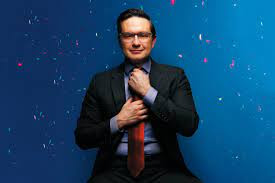
Mr. O’Toole became a casualty of this polarization just as Pierre Poilievre was discovering its usefulness in advancing his own political ambitions. Mr. Poilievre’s embrace of the Freedom Convoy protesters who descended nearly a year ago on Ottawa, where the F*** Trudeau flags that Mr. O’Toole denounces first proliferated, demonstrated his superior grasp of the dynamics of social media.

The Americans are further down this road than we are:

American social psychologist Jonathan Haidt has attributed Donald Trump’s improbable rise to the U.S. presidency in 2016 to his mastery of these dynamics “in which outrage is the key to virality, stage performance crushes competence, Twitter can overpower all the newspapers in the country, and stories cannot be shared (or at least trusted) across more than a few adjacent fragments – so truth cannot achieve widespread adherence.”

Mr. Poilievre won the 2022 Conservative leadership race to replace Mr. O’Toole by following this same social media playbook. He has continued to follow it since, largely bypassing mainstream media channels to reinforce a message that seeks to intensify feelings of indignation, frustration and anger among Canadians seeking to vent.

His November YouTube video, in which he asks whether “everything is broken in Canada” against the backdrop of “another tent city” in Vancouver, is pure performance art. It is highly manipulative, and representative of the fragmented politics of the social media age, where the art of persuasion has been replaced by efforts to reinforce the confirmation biases of your existing followers.

Today's politicians have forgotten the wisdom of that old tale that reminds us of what happens to the person who rides on the back of the tiger.

Image: AZ Quotes


Thursday, January 05, 2023

A Hell Of His Own Making

Christopher Marlowe's Dr. Faustus is the classic tale of what happens to a man who sells his soul to the devil. It's a classic because it keeps being replayed throughout human history. The latest version of the story is unfolding in Washington. Michelle Goldberg writes:

As we approach the anniversary of the Jan. 6 attack, it’s been grimly amusing to see that the party of insurrection can’t even manage the orderly transfer of power to itself. Rarely does karma play out so neatly.

Kevin McCarthy nurtured the spirit of reactionary nihilism in the Republican Party, first by trying to harness the energy of the Tea Party for his own ambition, and then by his near-total capitulation to Donald Trump. Now the chaotic forces he abetted have, at least for the moment, derailed his goal of becoming House speaker, subjecting him to multiple public humiliations at what was supposed to be his moment of triumph.

It is still possible that McCarthy will manage to eke this thing out by making even more concessions to the growing bloc of Republicans who oppose him. It is not possible, however, that he’ll emerge, in any real sense, as a leader.

Like Faustus, McCarthy was not hoodwinked. He has known for a long time who he's dealing with:

McCarthy’s approach to the far right has always been one of indulgence. Despite his own apparent lack of ideological conviction, he recruited many of the Tea Party candidates elected to the House in 2010. As Robert Draper, the longtime chronicler of the Republican Party, wrote in 2011, they represented “McCarthy’s more entrepreneurial approach to politics: seize upon a trend (in this case, government phobia), put all your money on it and then work hard to make the trend last.” McCarthy persisted in this approach as the Tea Party evolved into Trumpism, earning Trump’s patronizing sobriquet: “My Kevin.”

Marginalizing Trump after Jan. 6 would have been politically risky for McCarthy, no doubt. But by flying to Mar-a-Lago to abase himself before Trump just weeks after the attack on the Capitol — signaling to all that Trump remained the leader of the Republican Party — McCarthy helped seal his own fate. Trump is a major reason the Republican House margin is as small as it is; voters rejected many of Trump’s handpicked candidates, as well as the party’s broader election denialism. And though Trump himself has endorsed McCarthy, many of his disciples are hostile to anyone associated with the Republican establishment.

As The Times reported, of the 20 lawmakers who, as of this writing, have voted against McCarthy, 17 were endorsed by Trump in 2022. Five of them are freshmen — these are people who are part of Trump’s remaking of the Republican Party. Arizona’s Eli Crane, for example, is a former contestant on the business reality show “Shark Tank,” where he pitched bottle openers made of dummy .50-caliber bullets. (“Shoot open some bottles in the manliest way possible,” says an ad for the product.) Florida’s Anna Paulina Luna, an ally of the Trump die-hard Matt Gaetz, is a veteran and former swimsuit model who built a career as a conservative rabble-rouser, most recently running Hispanic outreach for the right-wing outfit Turning Point USA. These people seem to be crafting brands as much as political careers, meaning they benefit from high drama and have little need to work their way through Republican institutions.

And, like Faustus, McCarthy finds himself in a hell of his own making.

Image: thriftbooks

Wednesday, January 04, 2023

Joining The Fools Parade?

As we witness the clown show presently unfolding in Washington, Murray Brewster writes that the same insanity is showing up in Canada:

A U.S.-based research group that specializes in gauging geopolitical risk says Canada is showing signs of the same political contagion and polarization that has afflicted American politics.

The warning is contained in Eurasia Group's annual "Top Risk" report for the new year, released Tuesday. 

While Canada does not make the consultancy's "Top 10" in terms of geopolitical or instability risks, the group produced three standalone sub-reports on countries affected by worldwide political turbulence: Canada, Japan and Brazil.

In its analysis, the group sees most of the risk to Canada coming from the political convulsions in the United States — which [Ian] Bremmer described as the "Divided States of America."

He said the toxic political culture in Washington and throughout the U.S. is spilling across the border and it is likely to get worse in the coming year.

"The media environment in Canada, and the social media environment in Canada is increasingly resembling the media and social media environment in the United States," Bremmer said Tuesday.

"It is dysfunctional. It is rife with disinformation. It is deeply polarized. [The online discourse] is a bunch of people that do not reflect the average Canadian, do not reflect the average American in both countries."

Policy issues, especially energy and climate change, are being weaponized in Canada for political gain at the expense of national unity, he added.

Do we really want to join the fools parade?

Image: Walnet


Tuesday, January 03, 2023

An Episode Of The Twilight Zone

Today, as Republicans take control of the House of Representatives, a new day is dawning. That doesn't mean it's a good day. Paul Krugman writes:

As late as 2015, or so I and many others thought, we had a fairly good idea about how American politics worked. It wasn’t pretty, but it seemed comprehensible.

On one side we had the Democrats, who were and still are basically what people in other advanced nations call social democrats (which isn’t at all the same as what most people call socialism). That is, they favor a fairly strong social safety net, supported by relatively high taxes on the affluent. They’ve moved somewhat to the left over the years, mainly because the gradual exit of the few remaining conservative Democrats has made the party’s social-democratic orientation more consistent. But by international standards, Democrats are, at most, vaguely center left.

On the other side we had the Republicans, whose overriding goal was to keep taxes low and social programs small. Many advocates of that agenda did so in the sincere belief that it would be best for everyone — that high taxes reduce incentives to create jobs and raise productivity, as do excessively generous benefits. But the core of the G.O.P.’s financial support (not to mention that of the penumbra of think tanks, foundations and lobbying groups that promoted its ideology) came from billionaires who wanted to preserve and increase their wealth.

To be clear, I’m not suggesting that Democrats were pure idealists. Special-interest money flowed to both parties. But of the two, Republicans were much more obviously the party of making the rich richer.

 As time passed, the Republicans couldn't generate enough votes to win elections:

The problem for Republicans was that their economic agenda was inherently unpopular. Voters consistently tell pollsters that corporations and the rich pay too little in taxes; policies that help the poor and the middle class have broad public support. How, then, could the G.O.P. win elections?

The answer, most famously described in Thomas Frank’s 2004 book “What’s the Matter With Kansas?,” was to win over white working-class voters by appealing to them on cultural issues. His book came in for considerable criticism from political scientists, in part because he underplayed the importance of white racial antagonism, but the general picture still seems right.

As Frank described it, however, the culture war was basically phony — a cynical ploy to win elections, ignored once the votes were counted. “The leaders of the backlash may talk Christ,” he wrote, “but they walk corporate. … Abortion is never halted. Affirmative action is never abolished. The culture industry is never forced to clean up its act.”

These days, that sounds quaint — even a bit like a golden era — as many American women lose their reproductive rights, as schools are pressured to stop teaching students about slavery and racism, as even powerful corporations come under fire for being excessively woke. The culture war is no longer just posturing by politicians mainly interested in cutting taxes on the rich; many elected Republicans are now genuine fanatics.

And so today the true fanatics will take their seats -- led by a man who is clearly mentally ill. American politics have become an episode of The Twilight Zone.

Image:

Monday, January 02, 2023

A Brighter Assessment

My assessment of 2022 has been pretty dark. But E.J. Dionne writes that last year wasn't all doom and gloom:

We have become so accustomed to bad news, crisis and dysfunction that it’s hard to accept the ways in which 2022 was a surprisingly good year for democracy, innovative government action and even a degree of social peace.

Accepting that things have improved is almost never fashionable. It’s bad for page views and it carries the whiff of complacency. It’s safer to say that things are a mess because there are always so many injustices to be confronted and so much human suffering to be relieved. There’s also this: Since Donald Trump won the presidency in 2016, we’ve suffered from a frenzied addiction to the prospect of ruin.

But supporters of democratic governments and societies will never right the world’s wrongs without confidence that democracy itself can work — and unless a majority of citizens sees evidence that this is true. In 2022, the evidence began accumulating.

Dionne believes that democracy's chances are improving:

The failure of the Russian invasion of Ukraine, the courageous rallying of the Ukrainian people and the remarkable unity of the world’s democracies in standing against aggression is the most obvious sign that the democratic distemper of recent years is abating.

The relative success of democracies in dealing with the covid-19 pandemic contrasts with a regime-challenging failure in China. This, along with Russian President Vladimir Putin’s catastrophic misadventure, has quieted talk — reminiscent of similarly misguided commentary in the 1930s — that authoritarian governments are inevitably more “efficient” and “effective” in solving problems.

In the United States, the congressional session that just ended was remarkably productive. Major investments in infrastructure, clean energy and technology showed that our government has the capacity to think ahead, not just react to political pressures and short-term problems.

Government is building things again on a large scale. As it did in the era after the Soviet Union launched the Sputnik satellite in 1957, the United States is using public outlays to make the nation more technologically competitive. And the push for green energy shows there are ways to avert a planetary climate calamity while also restoring our manufacturing prowess.

Finally, the skeptics who said that campaigning on democracy in the midterm elections was a foolish strategy for Democrats were proved wrong. The GOP’s red wave failed to materialize for many reasons — Supreme Court overreach, especially on abortion, was a factor, and the actual achievements of a Democratic president and Congress counted, too. But democracy mattered. The Republican candidates rejected by voters tended to be the most extreme, the ones especially committed to Trump’s lies about the 2020 election, and those least ready for office.

So, as always, it comes down to whether you see the glass as half full or half empty.

Image: Wikipedia

Saturday, December 31, 2022

Happy New Year

2022 has been a horrific year. The war in Ukraine raged for most of it. The number of deaths from COVID continued to rise. Millions of us continued to believe the most outrageous lies. And all of this has happened as the planet gets hotter.

Will 2023 be better? Let's hope so.

Happy New Year.

Image: Hindustan Times

Friday, December 30, 2022

It's About The Money

The talk in Washington these days is all about George Santos. Eugene Robinson writes:

After initial reporting by the New York Times, journalists have discovered that, basically, Santos’s whole life story — as he sold it to voters — is a lie. He did not attend the exclusive Horace Mann Prep school in the Bronx, according to school officials. He did not graduate from Baruch College, as he had claimed. He did not climb the ladder of Wall Street success via Goldman Sachs and Citigroup, as he boasted. He is not “a proud American Jew,” as he wrote in a campaign document seeking support from pro-Israel groups, but instead considers himself “Jew-ish, as in ‘ish.’” Which apparently means not being Jewish at all.

Those are just a few of the acknowledged or apparent lies Santos told. He presented himself as the made-for-television incarnation of the vitality and diversity the Republican Party would like to project: a handsome gay Latino man, wealthy and self-made, whose very existence refuted the charge that today’s GOP shamelessly panders to racism and bigotry.

Most Republicans have had nothing to say about Santos. But some have spoken out:

One exception is Rep. Marjorie Taylor Greene (Ga.), who defended him with tweets acknowledging that Santos lied but accusing “the left” of lying, too, although most of the examples she cited were not lies at all. “The left said George Floyd didn’t die of a drug overdose, they lied,” she wrote. Fact check: Floyd was murdered, and a jury convicted former police officer Derek Chauvin of the crime.

Santos is just another in a line of better-educated con men:

In today’s GOP, a leading figure such as Sen. Ted Cruz (Tex.) — a cum laude graduate of Princeton University and a magna cum laude graduate of Harvard Law School who clerked for Supreme Court Chief Justice William H. Rehnquist — routinely rails against smarty-pants “elites” who supposedly look down on regular folks like him.

Greene and others have shown that the way to prominence in the party is not through legislative or administrative accomplishments but via attention-grabbing displays of performative outrage. If you can “own the libs” on Fox News and on Twitter, you can raise a lot of campaign cash; and if you can raise tons of money, you can have tons of power. What does it matter if what you say has no grounding in fact? By the time you get called on it, you’re off to the next over-the-top statement.

For Republicans, it's not about the truth. It's about the money.

Image: CNBC


Thursday, December 29, 2022

What Have We Learned?

What has the pandemic taught us? Andre Picard writes:

For the longest time, we didn’t take viruses (and other pathogens that cause infectious disease outbreaks) all that seriously. Indeed, one of biomedicine’s most infamous and oft-quoted declarations is that “it is time to close the book on infectious diseases and declare the war against pestilence won.” But while the line itself is actually an urban legend – the man it was widely attributed to, former U.S. surgeon general Dr. William H. Stewart, never said it – the overconfident sentiment behind it is all too real, and all too common.

COVID-19, though, has been humbling. It has challenged many of our assumptions about viral illnesses. That a coronavirus, a type of virus that usually causes colds, could kill millions – 6.7 million deaths worldwide, by the official numbers – was unexpected. That the virus could leave countless more with potentially permanent sequelae in the form of long-COVID – even more so.

The mitigation measures that were undertaken, at least in the early days of the pandemic – such as lockdowns, working from home and masking – also created an unprecedented living laboratory that produced some eye-opening findings. By dramatically reducing social interaction, we all but eliminated influenza and other respiratory illnesses in 2020 and 2021. But they came back with a vengeance in 2022.

With all of this experience behind us, some of us have learned the wrong lesson:

Some have taken this to mean that getting infected with viruses is actually good for us, because it strengthens the immune system. This is one of the many ideas that has fallen under the too-broad, unscientific umbrella term of “immunity debt.” But this thinking is wrong. There is no evidence of any such “debt” that needs to be paid.

What is the right lesson?

The lesson is that we should not see infections as inevitable. We have tools to prevent them, from masking to vaccination, and we don’t use them effectively. At the very least, we can reduce harm by not letting viruses run wild.

Yet, flu vaccination rates are poor, even for those at highest risk, such as elders and young children. COVID-19 booster uptake has been middling.

The current “tripledemic” that is hammering children and filling up pediatric hospitals is also a reminder that no illness exists in isolation.

If anything, COVID-19 infections may have caused immune dysregulation that makes people (particularly children) more susceptible to other infections.

This may explain why Canadians are seeing not only surges in strep A (a bacterial infection that is usually mild), but also rare invasive cases that prove deadly. Same goes for the outbreaks of scarlet fever (also caused by strep A) and chickenpox we’ve seen in some countries.

Unfortunately, we can expect what is happening to children to happen among the elderly, another high-risk group. We are already seeing outbreaks of influenza, RSV and strep A in nursing homes, which have already been devastated by the pandemic.

In some ways, these more recent viral challenges have distracted us from the main event: COVID-19. While we largely returned to “pre-pandemic” normalcy this year, this has actually been the deadliest year yet for COVID-19; in 2022, Canada will surpass 17,000 deaths, more than the 14,642 deaths we recorded in 2020 or the 16,489 in 2021. A fifth wave of Omicron is just beginning.

So, what have we learned? First, viruses are not going away. And second, we have to use the tools we have -- over what could be a very long run -- to save lives.

Image: Britannica


Wednesday, December 28, 2022

One Nation Under Danielle Smith

Danielle Smith is arguing that Alberta is a nation. That's an argument Quebec has been making for a long time. But there are differences between the two provinces. Max Fawcett writes:

While Alberta has all the requisite feelings for nationhood, it’s badly lacking when it comes to the facts. There are no distinct linguistic or cultural characteristics that would clearly distinguish Alberta as a nation, unless you consider the hoser dialect from the mockumentary Fubar to be an accurate representation of the province as a whole.

Unlike Quebec, which existed long before Confederation and had a clearly defined political and legal tradition that set it apart from the rest of what would become Canada, Alberta was part of “Rupert’s Land,” an administrative territory signed over to the Hudson’s Bay Company by King Charles II. Eventually, that land was bought out by the newly formed country of Canada in 1869 for the princely sum of $1.5 million, and Alberta was carved out from it alongside Saskatchewan in 1905.

There is, however, one characteristic that both provinces share -- a seething sense of grievance:

As Alberta Sen. Paula Simons once said, “For better or worse, and often for worse, the culture of grievance is baked into the DNA of this province.”

 Things change, however, when a Conservative government is in power in Ottawa:

As political science professor Mike Medeiros wrote in a December 2021 piece for Policy Options, “Political movements that represent actual ‘nations’ do not care much about which party is heading the central government; they are more concerned with preserving and enlarging their autonomy.”

All of Canada's provinces jealously guard their constitutional backyards. But, in Alberta, a Liberal government in Ottawa becomes an existential threat.

Image: FlagMart Canada


Saturday, December 24, 2022

Happy Holidays

Whether you celebrate Christmas, Hannukah -- or just being alive -- may there be fellowship at your table and warmth at your hearth -- as we all try our best to deal with this snowstorm.

Happy Holidays.

Image: CKDR

Friday, December 23, 2022

Lean And Hungry McCarthy

It was interesting to watch Kevin McCarthy's reaction to Volodymyr Zelinsky's address to Congress. Dana Milbank writes:

He stood at the floor leader’s desk, restlessly playing with the microphone. As Volodymyr Zelensky was about to enter the chamber, McCarthy checked his phone. As the adulation began, McCarthy clapped absently while chatting with Republican whip Steve Scalise (La.).

Zelensky told the rapt chamber that “your money is not charity” but “an investment in the global security and democracy that we handle in the most responsible way.” Lawmakers rose to applaud. McCarthy, who vows to probe Ukraine’s use of U.S. funds, froze in his chair before eventually lumbering to his feet.

Zelensky urged lawmakers to “ensure that America’s leadership remains solid, bicameral and bipartisan.” McCarthy again rose slowly, then quickly sat back down.

Zelensky called on Americans to “help us bring to justice everyone who started this unprovoked and criminal war.” McCarthy sat out the standing ovation, drumming his fingers.

“Let the world see that the United States are here,” Zelensky urged. McCarthy yawned.

Many in McCarthy's party are no friends of Zelinsky:

Most GOP lawmakers skipped the speech entirely, and a few in attendance — Lauren Boebert, Matt Gaetz, Tim Burchett — sat through it sulking. Other Republicans trashed Zelensky, calling him “the Ukrainian lobbyist” (Rep. Thomas Massie), “the shadow president” (Rep. Marjorie Taylor Greene) and a “welfare queen” (Donald Trump Jr.).

McCarthy has a "lean and hungry" look about him. He has sold his soul to herd cats. As Shakespeare's Caesar warned, "such men are dangerous."

Image: Carolyn Kaster/AP


Thursday, December 22, 2022

Failure -- Pure And Simple

Andrew Nikiforuk has chronicled our failure to deal with COVID. The consequences have been disastrous:

As the pandemic evolves, the failure of current public health policies now shines clearer than a midnight star. The assumption that hybrid immunity — vaccines combined with infections — would end COVID’s relentless evolution has fed the pandemic, not starved it.

If getting infected, vaxxed, or vaxxed-plus-infected actually made us safe as COVID circulates, Canada wouldn’t be recording its highest death rate of nearly 20,000 this year.

Yes, COVID has vanquished more Canadians this year than in 2020 or 2021. And the virus has sent more Canadians to the hospital this year than in previous ones, too.

We have simply refused to do what we know works:

The solutions are not hard or onerous. They do not involve lockdowns.  Or even major rule changes.

The key is to simply and systematically reduce viral transmission with clear messages that get the job done to protect the general health of our citizens, children and elders.

Providing schools and work places with good ventilation and filtration is doable and even cheap, given that Canada has spent $9 billion on COVID hospitalization costs alone this year.

Why isn’t it happening?

Putting on a N95 mask or a respirator in public spaces radically reduces transmission and protects everyone. 

Why isn’t the government providing N95 masks for free to encourage their widespread use?

Isolating when sick, an old-fashioned courtesy, reduces the spread of disease.

Why did we abandon this basic communal kindness? 

Providing access to testing gives everyone information about viral movement and prevalence. It also invites proper treatment or respectful isolation. 

Why have we retreated from medical accountability?

Public health officials have a duty to advance health and serve the common good. They abandon that responsibility when they kowtow to the short-term needs of cowardly politicians with an eye only on election cycles and disease of power.

The reason we have not dealt with COVID is that there is a more viscous virus than COVID. It's called political cowardice.

Image: Quotefancy


Wednesday, December 21, 2022

The Petulant Oligarch

Elon Musk's meltdown reminds us -- yet again -- that we live in the Age of the Petulant Oligarch. Paul Krugman writes:

As The Times’s Kevin Roose recently pointed out, Musk still has many admirers in the technology world. They see him not as a whiny brat but as someone who understands how the world should be run — an ideology the writer John Ganz calls bossism, a belief that the big people shouldn’t have to answer to, or even face criticism from, the little people. And adherents of that ideology clearly have a lot of power, even if that power doesn’t yet extend to protecting the likes of Musk from getting booed in public.

How did we get here?

It’s not really a surprise that technological progress and rising gross domestic product haven’t created a happy, equitable society; downbeat visions of the future have been staples of both serious analysis and popular culture for as long as I can remember. But both social critics like John Kenneth Galbraith and speculative writers like William Gibson generally imagined corporatist dystopias that suppressed individuality — not societies dominated by thin-skinned egomaniac plutocrats acting out their insecurities in public view.

Part of the answer, surely, is the sheer scale of wealth concentration at the top. Even before the Twitter fiasco, many people were comparing Elon Musk to Howard Hughes in his declining years. But Hughes’s wealth, even measured in today’s dollars, was trivial compared with Musk’s, even after the recent plunge in Tesla stock. More generally, the best available estimates say that the top 0.00001 percent’s share of total wealth today is almost 10 times what it was four decades ago. And the immense wealth of the modern super-elite has surely brought a lot of power, including the power to act childishly.

Beyond that, many of the superrich, who as a class used to be mostly secretive, have become celebrities instead. The archetype of the innovator who gets rich while changing the world isn’t new; it goes back at least as far as Thomas Edison. But the big fortunes made in information technology turned this narrative into a full-blown cult, with wannabe or seem-to-be Steve Jobs types everywhere you look.

Indeed, the cult of the genius entrepreneur has played a large role in the rolling debacle that is crypto. Sam Bankman-Fried of FTX wasn’t selling a real product nor, as far as anyone can tell, are those of his former competitors who haven’t yet gone bankrupt: After all this time, nobody has come up with significant real-world uses for cryptocurrency other than money-laundering. What Bankman-Fried was selling, instead, was an image, that of the mussy-haired, scruffily dressed visionary who grasps the future in a way normies can’t.

Elon Musk isn’t in quite the same category. His companies produce cars that actually drive and rockets that actually fly. But the sales and especially the market value of his companies surely depend at least in part on the strength of his personal brand, which he can’t seem to help himself from trashing ever more with each passing day.

Put bluntly, it comes down to this: the concentration of wealth encourages corruption.

Image: Vanity Fair

Tuesday, December 20, 2022

Fraud Is His Middle Name

Yesterday, the January 6th Committee referred Donald Trump to the justice department on four charges. Of the four, Eugene Robinson writes, Trump's attempt to "defraud the United States" is the most obvious and easy to understand:

The fraud allegation relates mostly to a deceitful attempt to field slates of fake electors to reverse the result of the 2020 election. More broadly, however: What has Trump’s entire political career been but a great big fraud?

Start at the beginning. Before 2009, Trump was a Democrat who generally supported the party’s positions on issues such as abortion. It was only in 2012, just a decade ago, that he began seriously seeking to amass power within the Republican Party — and changing, or pretending to change, his views on social issues accordingly.

He needed to win support from evangelicals, an important GOP constituency, so when he campaigned for the presidency in 2015, he called the Bible his “favorite book” but was unable to cite any verses. In 2016, he visited Liberty University, a conservative school founded by Jerry Falwell, and did quote a verse from Second Corinthians about liberty but absurdly referred to the book as “Two Corinthians.”

When he launched his 2016 presidential bid, he claimed that since he was so wealthy, he would self-finance his campaign — and thus not be beholden to special interests. He did spend some of his own money, but only about a fifth of the total expenditures he reported to the Federal Election Commission came from his own pocket. The rest he raised from donors big and small, including low-income supporters for whom giving any amount of money was a stretch.

While president, he operated a gaudy hotel in Washington on Pennsylvania Avenue, just blocks from the White House. Foreign governments seeking favor and influence spent more than $750,000 at that hotel during Trump’s term in office. And the Secret Service spent more than $1.4 million staying at Trump properties over four years, facing nightly rates as high as $1,185 per room.

The money grift continues. This year, Trump formed a “Save America” political action committee that raised an estimated $100 million, mostly by constantly dunning small-dollar donors. Trump gave the impression that the money would be used to help Republicans in the November midterm elections, but even his handpicked candidates received no more than a trickle of cash. In Georgia, defeated GOP Senate nominee Herschel Walker’s campaign accused Trump of “deceptive fundraising.”

Just last week, Trump ballyhooed a “major announcement” that turned out to be the sale of kitschy digital trading cards of him photoshopped as an astronaut, an Old West sheriff, a superhero and other macho personas. The video of Trump announcing this NFT collection would have made the cheesiest late-night infomercial pitchman blush. And the $99 that each gullible purchaser sent in went not to any political cause but to Trump himself. Even Trump’s longtime ally, Stephen K. Bannon, watched Trump’s spiel and moaned, “Make it stop.”

Trump's middle name is John. The truth is that Fraud should be his middle name.

Image: Province Of Manitoba


Monday, December 19, 2022

Do They Understand?

During the recent by-election in Mississauga-Lakeshore, Pierre Poilievre was nowhere to be seen. Michael Harris asks:

Where was Pierre Poilievre when his candidate needed him?

Perhaps he was on YouTube preaching to the converted. 

Or going for a stroll wearing his ‘Tarsands Strong’ hoodie. 

Maybe he was preparing a draft of the pink slip for Tiff Macklem, to be delivered to the governor of the Bank of Canada should Poilievre ever become prime minister. 

He might even have been reviewing his investment portfolio, to see if he had sunk a bit too much into cryptocurrency, you know, that great hedge against inflation. A financial commentator on CNN described the virtual money differently: the biggest Ponzi scheme in history.

This is a politician who claims to fight for the little guy. That is exactly what his candidate was in this by-election, a rookie underdog going up against a savvy veteran, the former finance minister of Ontario. 

Last time around, the Conservatives lost by six points. This time they lost by fourteen:

The same Poilievre who shook all those hands during the leadership race and bragged about it didn’t knock on a single door in Mississauga-Lakeshore. 

Remember, Poilievre won the lion’s share of the votes in Mississauga-Lakeshore during the Conservative leadership race. As Konrad Yakabuski wondered in The Globe and Mail, where were the hordes of new and enthusiastic Tories Poilievre signed up for that race? They certainly weren’t at the polls to save their candidate from getting waxed. 

When the auditor general points out the small matter of $27-billion of dubious COVID payouts that should be investigated, and the government reacts with a yawn, you would think that would give the Conservatives an advantage. Instead, the party bombed in its first electoral test under its new leader, just as disqualified leadership candidate Patrick Brown predicted it would, if the CPC made the hard-right turn to Poilievre as leader.

Voter turnout was just 25 per cent. There are two interesting things about that. Under normal circumstances, the CPC wins when the turnout is low. This time they were crushed. NDP votes appeared to go to the Liberals.

And then there is this. Is it possible that voters here didn’t show much interest in punishing the government because they don’t see the problems they are facing as nation? Inflation is not made in Canada, and supply lines have been disrupted everywhere. The current dismal situation is a global phenomenon that no one national leader can either fix or be blamed for. 

If that is true, and if that perception were to hold in other ridings, the CPC dream of riding aggrieved suburban voters across the land back into power will be dashed. The strategy of claiming everything is broken and just one person, Justin Trudeau, is responsible, will prove as empty as it is intellectually dishonest. Trudeau’s message that Canadians stick together in tough times, backed by their government, might just have more resonance than trying to make cheap political points out of universal hard times.

The Conservatives made a mistake when they chose Poilievre. Do they really understand the mistake they made?

Image: Macleans

Sunday, December 18, 2022

Labour On the Rise

Unions are on the rise. And, Linda McQuaig writes, we need to remember what unions have given us:

The public doesn’t usually warm to the notion of labour militancy — until reminded that, without it, weekends would be a lot shorter, or maybe not exist at all.

The truth is labour militancy has benefited all of us. It was instrumental in attaining the weekend, the eight-hour workday, the end of child labour, public pensions and public health care, and countless other gains that have dramatically improved the lives of working people and the broader public.

It’s worth keeping this connection in mind as the union movement — sidelined and subdued for decades — is finding its sea-legs and starting to reassert itself.

Doug Ford has done a lot to help labour find its sea-legs:

Ontario Premier Doug Ford’s overreach — in picking on lowly paid education workers and using the soft-touch skills of an axe murderer in invoking the Constitution’s notwithstanding clause — helped CUPE win over the public, unite the labour movement and convince Ford he had no option but retreat.

There will, of course, be a backlash:

Commentators are remarkably quick to depict striking workers as holding the public hostage, while never noticing that business interests routinely hold us hostage when they threaten to leave the country if their taxes are raised.

In the case of such business threats, we’re told that the only answer is to submit to the demands of the hostage-takers and keep their taxes low. In the case of workers, however, we’re told never to give in to hostage-takers — it only encourages them.

In fact, wage gains have not been a major source of recent inflation, while corporations have taken advantage of inflation to pad their profits, notes economist Jim Stanford, director of the Centre for Future Work.

Even so, Bank of Canada governor Tiff Macklem has singled out workers for discipline, advising businesspeople at a Canadian Federation of Independent Business event last summer to hold wage increases in check. The audience seemed only too happy to oblige. “You bet! We’re on it, sir!”

But the fight is not just about wages. There are fundamental changes in the works:

While white men continue to dominate the corporate world, women and minorities have surged into leadership roles in the union movement, where there’s an appetite for breaking down traditional power structures.

Labour’s role in these battles is key. It is the only force in society sufficiently strong and organized to effectively champion the broad interests of working people, while pushing back against the crushing weight of corporate power.

Labour takes on these battles because equality — improving conditions for everyone — is baked into its agenda.

As J.S. Woodsworth proclaimed, "“What we desire for ourselves, we wish for all.”

Image: AZ Quotes


Saturday, December 17, 2022

Money And Mental Illness


Elon Musk has suspended several journalists from Twitter. Paul Farhi writes:

Many of the journalists suspended Thursday, including Washington Post technology reporter Drew Harwell, had been covering that rule change, as well as Musk’s claims that he and his family had been endangered by location sharing.

Musk suggested on Twitter, without evidence, that the journalists had revealed private information about his family, known as doxing. “Criticizing me all day long is totally fine, but doxxing my real-time location and endangering my family is not,” he tweeted late Thursday.

At least eight other journalists were suspended the same evening, including New York Times technology reporter Ryan Mac.

CNN reporter Donie O’Sullivan was suspended shortly after posting a tweet about Musk’s claim that a “crazy stalker” had chased his young son in Los Angeles, according to screenshots.

Matt Binder, a Mashable reporter, was tweeting about O’Sullivan’s suspension when his account also went dark.

Independent journalist Tony Webster’s account was also suspended as of Thursday evening. So were the accounts of former MSNBC host Keith Olbermann; Intercept reporter Micah Lee; Voice of America’s chief national correspondent Steve Herman; and Aaron Rupar, a Substack writer with nearly 800,000 followers on Twitter.

This has happened at the same time Donald Trump has launched his latest business venture: selling Pokemon cards of himself clad as a superhero who vanquishes his enemies.

We've known for a long time that money is a catalyst for corruption. It appears that it's also a catalyst for mental illness.

Image: YouTube

Friday, December 16, 2022

A New Nutbar

Polls suggest that Donald Trump's popularity is waning and that Ron DeSantis' star is on the rise. Paul Krugman writes:

Anyone imagining DeSantis as a more sensible, saner figure than Trump — a right-wing populist without the reality-denying paranoia — is delusional. DeSantis hasn’t gone down all the same rabbit holes as Trump, but he has gone down some of his own, and his descent has been just as deep.

Above all, DeSantis is increasingly making himself the face of vaccine conspiracy theories, which have turned a medical miracle into a source of bitter partisan division and have contributed to thousands of unnecessary deaths.

The vaccine story is truly remarkable:

In the spring of 2020 the U.S. government initiated Operation Warp Speed, a public-private partnership intended to develop effective vaccines against the coronavirus as quickly as possible. The effort succeeded: By December 2020, far sooner than almost anyone had imagined possible, vaccinations were underway. (I received my first shot the next month, on Jan. 28, 2021.) And yes, this was a success for the Trump administration.

Have the vaccines worked? And how. There are multiple ways to evaluate their lifesaving effect, but I’m especially taken with a simple approach promoted by the analyst Charles Gaba, who looks at the correlation across U.S. counties between vaccination rates and Covid death rates. Between May 2021, when two-dose vaccinations first became widespread, and September 2022 the least-vaccinated 10 percent of counties suffered a death rate more than three times as high as the most-vaccinated.

Now, you may have heard that at this point deaths among vaccinated Americans are exceeding those among the unvaccinated, which is true. But that’s partly because most deaths are among the elderly, who are overwhelmingly vaccinated; very few Americans have received no shots; and not enough vaccinated people are getting booster shots.

But why are some U.S. counties so much less vaccinated than others? The answer, as Gaba shows, is partisanship: There’s a startlingly close relationship between the share of a county’s voters who supported Trump in 2020 and the percentage of that county’s residents who haven’t received their shots — and the percentage who have died from Covid.

You can, by the way, see the same patterns at the level of whole states. For example, although New York was hit hard in the first months of the pandemic (before we knew how the coronavirus spread or what precautions to take), since May 2021 more than twice as many people have died of Covid in Florida than in New York. Even taking Florida’s slightly larger and much older population into account, that’s thousands of excess deaths in the Sunshine State.

And the governor of the Sunshine State

announced on Tuesday that he was forming a state committee to counter federal health policy recommendations — and asking for a grand jury investigation into unspecified “crimes and misdemeanors” related to coronavirus vaccines.

I doubt that anyone believes that DeSantis knows or cares about the scientific evidence here. What he’s doing instead is catering to a Republican base that equates listening to experts, on public health or anything else, with “wokeness,” and demonizes anyone saying things it doesn’t want to hear.

As far as I can tell, DeSantis hasn’t joined the likes of Elon Musk in calling for the prosecution of Anthony Fauci, who led America’s Covid response. But he has called Fauci a “little elf” and said that we should “chuck him across the Potomac.” (Presidential!)

Now, will DeSantis’s attempt to position himself as the leader of the anti-vax movement and give at least tacit approval to conspiracy theories actually endear him to the Republican base? Again, I don’t know. Even if it does, I suspect that it will hurt him in the general election if he does become the nominee: Vaccine paranoia and Fauci hatred are still niche positions in the electorate at large.

But anyone who imagines that replacing Trump with DeSantis as the G.O.P.’s leader would signal a party on its way to becoming sane again is in for a rude shock.

It would simply be replacing an old nutbar with a new nutbar.

Image: NPR


Thursday, December 15, 2022

Biden's Way

When it comes to the American economy, things are going Joe Biden's way. Jennifer Rubin writes:

The Post reports: “Prices cooled again in November, rising 7.1 percent compared with last year, the smallest year-over-year increase since last December. They also climbed 0.1 percent over October, beating analysts’ expectations.” In addition, core inflation rose only 0.2 percent, “the smallest increase since August 2021, according to data released Tuesday morning by the Bureau of Labor Statistics.”

The Republicans ran on an apocalyptic economic vision during the midterms. But that vision -- like so much else Republicans spout these days -- was simply false:

President Biden on Tuesday took the opportunity to boast about the data: “In a world where inflation is rising at double digits in many major economies around the world, inflation is coming down in America.” He argued that this served as proof that “our economic plan is working.”

Biden also highlighted the 10.5 million jobs added during his presidency, including 750,000 in manufacturing. And he laid out his goals for the economy, which now seem attainable: “Get price increases under control without choking off economic growth; bring inflation down while keeping our labor market resilient; build an economy from the bottom up and the middle out.”

According to GOP gospel, all of that pandemic spending was a mistake, and Biden was steering the U.S. economy into a recession. Oh, and according to Republicans, Biden was somehow to blame for skyrocketing gas prices.

So where does that leave Republicans? All they have left is a seething need for revenge. And that is what they have wanted all along.

Image: Power Thesaurus

Wednesday, December 14, 2022

How Smart Is He?

How is Pierre Poilievre doing? If the recent byelection in suburban Toronto is a signal, you'd have to say, "Not well." Max Fawcett writes:

Mississauga-Lakeshore is a suburban Ontario riding the CPC won under Stephen Harper’s leadership in 2011 and Poilievre absolutely must win if he wants to form the next federal government. This time, his side lost by 14 points — more than double the six-point defeat it suffered in the 2021 federal election. The CPC’s poor showing is all the more striking in light of the current political environment, one that’s dominated by inflation, rising interest rates and other economic dynamics that should hurt the incumbent party. “Yup, the Poilievre message is really resonating in suburban Ontario,” Globe and Mail columnist Andrew Coyne tweeted sarcastically.

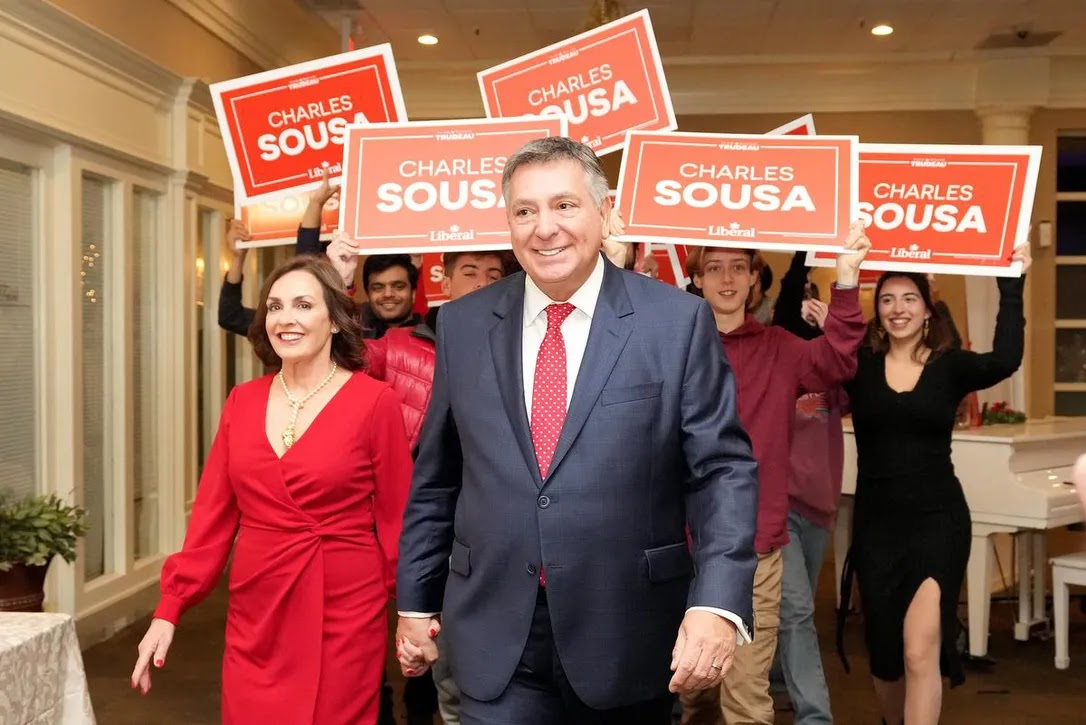
As former Trudeau pollster Dan Arnold noted, the Liberal vote share was higher in the byelection (and remember, byelections tend to be terrible for incumbent party candidates) than in 2021, 2019 or 2015 — and higher than Sousa, a former Ontario Liberal finance minister, ever got in a provincial election. “As for Poilievre,” Arnold wrote, “he did succeed in collapsing the PPC vote, but will come in with lower vote share than (former CPC leader) Erin O'Toole did in 2021. He's right around (former CPC leader Andrew) Scheer's 2019 total.”

Will Poilievre learn from this experience? Time will tell. And Poilievre does have time to learn. There are two obvious lessons to be learned:

Chief among those is the reality that what works for a leadership race — a steady diet of well-seasoned political red meat — doesn’t suit the appetites of the general electorate. YouTube videos about lumber and cryptocurrency may fire up his young male supporters within the Conservative Party of Canada, but they seem far less effective at motivating less ideologically strident voters. Not everyone is on Twitter or YouTube, and page views aren’t the same thing as votes — especially when many of those views can come from outside our borders.

An even bigger lesson revolves around his approach to dealing with the mainstream media. Picking fights with the media may fire up the base, delight your donors and help you control your message, but they also make it much harder to reach people who aren’t already invested in your politics. And yet, Poilievre seemed determined to ice out major media outlets in the course of campaigning for Mississauga-Lakeshore.

This sort of narrowcasting media relations strategy may have worked in an internal party race, especially one where hatred of the “mainstream media” is practically an article of faith. But as the byelection blowout shows, it’s far less effective when you have to contend with non-conservative voters and the media outlets they rely upon.

Will Poilievre and Co. learn these lessons?

It will be tempting for them to blame the mainstream media, attack the subsidies those outlets receive from government and suggest the solution lies in defunding news organizations and the CBC. The Liberals, for their part, probably wouldn’t mind seeing the Conservatives go down this road, given that it looks an awful lot like the same intellectual dead-end Scheer proudly steered into during his last speech as CPC leader.

If Poilievre’s people don’t want him to become the second coming of Scheer, they’ll need to find a way to engage more constructively with people outside their partisan bubble. That will almost certainly mean opening him up more to the mainstream media and the Parliamentary Press Gallery and finding a way to turn a toxic relationship into a conventionally adversarial one. If they don’t, they risk turning Justin Trudeau into a four-time prime minister — perhaps even one with a new majority mandate.

So we're left with the question: Just how smart is Pierre Poilievre?

Image: The Toronto Star