Monday, April 03, 2017

No Place For Amateurs

 
The Bloviators of the Right have claimed for a long time that government should be run like a business. Donald Trump's son-in-law recently repeated that claim. Government, he said, should be run like "a fine American business." Robin Sears writes that anyone who buys that claim is a dupe:

To anyone who has served in government the reasons why this fantasy always ends in tears are obvious. Politics is a profession, and governing successfully requires years of training. Governing is about choice: hard difficult, unpleasant choices. As several presidents have observed, most recently Barack Obama, if the decision were not risky and dangerous it would not have risen to the president’s desk. CEOs’ decisions rarely carry risks of life and death.

Donald Trump is once again proving that the government/business meme is wrongheaded:

A casino operator can, with relative ease, assess what marketing expenditure and pricing decisions will deliver what revenue and profit. Governments have no such dependable metrics. The variables capable of wrecking a public program are almost endless: foot-dragging bureaucrats, undermining political opponents, less than truthful participants and measurement tools less useful that a wet finger raised to the breeze.

Obama devoted 14 months, hundreds of speeches, thousands of staff hours negotiating — and then most painfully — spending enormous political capital, including the loss of both the House and the Senate, in winning his flawed health care reform bill. He was no Lyndon Johnson in political craft, but neither was he a rank amateur.
Successful community organizing, despite conservative sneers, is a skill set useful in politics. He accepted dilution of his original vision and made payoffs and side-deals to health industry and individual senators to win.

Donald Trump invested a few days of phone calls and cattle-call meetings with several dozen congressional leaders at a time. Neither serious nor professional, and in the end a disastrous blow to his administration’s legislative prospects on anything.

And now we have Kevin O'Leary who -- like Trump -- claims that he will get things done:

Kevin O’Leary is Trump-like, but the parallels are not in shared dubious claims of business genius, but in personality and behaviour. Each is proud of his ignorance of government, and portrays it as an asset. (Imagine your heart surgeon introducing himself, “Hi, my name is George. I used to run a collision repair shop, so fixing human bodies instead of car bodies didn’t seem like such a big leap …) Each has built a career on insult — sometimes useful for an opposition politician, fatal in political deal making.

O'Leary and Trump --- for all their bluster -- are rank amateurs. And politics is no place for amateurs. 

Image: The Huffington Post

Sunday, April 02, 2017

Fraud -- Pure And Simple


These days, economic nationalism is the prodigal son of the political right. Tom Walkom writes:

An ardent form of nationalism has fuelled the rise of right-wing political leaders, such as Donald Trump in the U.S. and Marine Le Pen in France.

Nationalism is driving Britain from the European Union, a move that — whether justified or not — threatens to deal a major blow to the continent’s common market experiment.

In Turkey, President Recep Tayyip Erdogan adroitly uses nationalism to maintain and solidify his hold on power. In Russia, President Vladimir Putin does the same.

But it doesn't have to be that way. Indeed, John A. Macdonald's National Policy was one of the cornerstones upon which this nation was built. And it was a centrepiece of 20th century political policy:

Canada has had much experience with economic nationalism, running right back into the 19th century when John A. Macdonald’s Conservative government imposed protective tariffs to build up domestic manufacturing.

More recently, Canadian economic nationalism was very much a project of the centre-left. In the NDP, it was expressed first through the short-lived Waffle faction and later through the mainstream party. The Liberal government of Pierre Trudeau implemented popular nationalist policies in the ’70s. The free-trade election of 1988 was fought over economic nationalism.

After the 1988 election, all the political parties changed their tune: 

For the Liberals, the solution to the ills of globalization is to press for more. Prime Minister Justin Trudeau’s government praises the still-not-quite-yet-concluded Comprehensive Economic and Trade Agreement with the European Union.

It wants similar arrangements with Japan and China. And it promises to remedy any dislocation caused by all of this with a vague cocktail of retraining programs and innovation subsidies
The Conservatives remain wedded to the orthodoxy of free trade. Some of the party’s leadership candidates have flirted with the darker elements of Trumpian nationalism, such as his suspicion of Muslims.

But on the main theme of globalization, the Conservatives and Liberals are indistinguishable.
The New Democrats have a more complicated view of free trade. They like some deals but not others. Among NDP leadership candidates, Ontario MP Charlie Angus comes closest to articulating the despair of those left out of the game.

And it's the despair of those who have been left out that is roiling the political landscape. The problem is that people like Donald Trump -- whose cabinet boasts a combined net worth of $12 billion -- who are using that despair to further the interests not of the many but of the few.

It's fraud -- pure and simple.

Image: Reformed Libertarian

Saturday, April 01, 2017

In Biblical Terms


For nearly fifty years, we have bought into a myth -- which we take to be as axiomatic as the sky is blue. Rutger Bregman writes:

These days, politicians from the left to the right assume that most wealth is created at the top. By the visionaries, by the job creators, and by the people who have “made it”. By the go-getters oozing talent and entrepreneurialism that are helping to advance the whole world.

Now, we may disagree about the extent to which success deserves to be rewarded – the philosophy of the left is that the strongest shoulders should bear the heaviest burden, while the right fears high taxes will blunt enterprise – but across the spectrum virtually all agree that wealth is created primarily at the top.

And therein is the source of the mess we now find ourselves in:

So entrenched is this assumption that it’s even embedded in our language. When economists talk about “productivity”, what they really mean is the size of your paycheck. And when we use terms like “welfare state”, “redistribution” and “solidarity”, we’re implicitly subscribing to the view that there are two strata: the makers and the takers, the producers and the couch potatoes, the hardworking citizens – and everybody else.

The truth is that we've got things precisely backwards:

In reality, it is precisely the other way around. In reality, it is the waste collectors, the nurses, and the cleaners whose shoulders are supporting the apex of the pyramid. They are the true mechanism of social solidarity. Meanwhile, a growing share of those we hail as “successful” and “innovative” are earning their wealth at the expense of others. The people getting the biggest handouts are not down around the bottom, but at the very top. Yet their perilous dependence on others goes unseen. Almost no one talks about it. Even for politicians on the left, it’s a non-issue.

The truth is that the those with money these days area a new class of rentiers:

To understand why, we need to recognise that there are two ways of making money. The first is what most of us do: work. That means tapping into our knowledge and know-how (our “human capital” in economic terms) to create something new, whether that’s a takeout app, a wedding cake, a stylish updo, or a perfectly poured pint. To work is to create. Ergo, to work is to create new wealth.

But there is also a second way to make money. That’s the rentier way: by leveraging control over something that already exists, such as land, knowledge, or money, to increase your wealth. You produce nothing, yet profit nonetheless. By definition, the rentier makes his living at others’ expense, using his power to claim economic benefit.

The rentiers have captured the political system. That's why capitalism has failed. In Biblical terms, the money changers have taken over the temple.

Image: Cashchanger

Friday, March 31, 2017

The Northern Trumpists


Michael Harris writes that, as the Conservative leadership race comes down to the finish, you have to wonder what the party learned under Stephen Harper's tutelage:

Some days it’s hard to tell if the Dubious Fourteen are political birds of a feather — or warring members of rival motorcycle gangs. There are no excuses for the tawdry display of ego and ambition that so far has passed for a leadership race. For one thing, the party should have learned its lessons from the years of lying, cheating and democracy-busting in the Harper era.

Consider the sound an fury over phony Tories and the echoes of those robocalls:

The same dudes who gave us the In-and-Out Scandal, Bruce Carson, Dean del Mastro, the Duffy/Wright Affair — and very likely the telephone lists of non-supporters for the robocalls affair — is even cheating in its own leadership race. They can’t even replace Yacht Girl without resorting to fake memberships purchased anonymously through the party’s own website.

This is no small matter. Party rules require that memberships be purchased by personal credit cards or cheques. As candidate Chris Alexander said, this was not just a case of people being signed up to memberships without their knowledge. Someone was using software that masked IP addresses and allowed multiple members to be signed up from the same computer — high-tech cheating not entirely unlike the variety used in the unsolved robocalls scandal.

Kevin O'Leary is threatening to use the notwithstanding clause against the provinces:

When was the last time you heard a candidate in a leadership race threaten to use what amounts to the Notunderstanding Clause of the Constitution to impose his policies? Or ask for an audit of his fellow candidates and their alleged party membership sales, as Kevin O’Leary recently did?

O'Leary, Leitch and Bernier seem to have cornered the Conservative market. Lisa Raitt, Michael Chong and Erin O'Toole, Harris writes, "need to find a new home."

Image: Huffington Post

Thursday, March 30, 2017

Frightening To Behold


Two days ago, as Donald Trump signed an executive order to roll back Barack Obama's environmental legacy, he was surrounded by coal miners. “Come on, fellas,” Trump said. “You know what this is? You know what it says, right? You’re going back to work.” It was all part of the con.  E. J. Dionne writes:

Trump already signaled his indifference to the lives of his working-class supporters by backing the failed House Republican health care bill. It would have deprived 24 million Americans of health insurance. And the administration’s next big priority is corporate tax cuts, not an issue high on voters’ wish lists in Erie, Pennsylvania, or Bay County, Michigan.
   
Then again, not many proletarians hang around at the Trump resorts and golf courses where our commander in chief has already spent nearly a third of his time in office.

It is a con being played on the country's most vulnerable citizens:

In a paper released last week by the Brookings Institution (with which I am associated), they show that the rising death rates among less well-off whites aged 45-54 contrast sharply with the falling death rates among comparably placed citizens in Europe.
   
“Mortality declines from the two biggest killers in middle age—cancer and heart disease—were offset by marked increases in drug overdoses, suicides and alcohol-related liver mortality,” they write.
   
We are living in a society where the long-standing injustices of racial discrimination against African-Americans and Latinos are compounded by the injuries of class. These afflict all lower income groups, but they are currently hitting white Americans particularly hard.

The painful truth is that the coal mining jobs Trump promised are not coming back. They have been replaced by automation, natural gas and renewable energy sources. Those who surrounded Trump were being conned -- arrogantly -- and in public.

Trump came to office by stoking their legitimate economic anxiety. But he sold them a lie. And, as they discover that lie, their anger will be frightening to behold.

Image: IndustriALL Global Union

Wednesday, March 29, 2017

Sending Him To The Showers


The Liberals want to change the rules in the House of Commons. They want to limit Justin Trudeau's required appearances in the House to once a week. That's the way the Brits do it. But, Lawrence Martin writes, that won't wash here:

The optics on accountability are dreadful. That the Liberals were perceived to be intent on proceeding unilaterally on this and other changes to parliamentary procedure had critics in high dudgeon.

Trying to defend the initiative was Liberal House Leader Bardish Chagger. She was beaten up, as she often is. It’s hardly her fault. She’s a greenhorn, a 36-year-old rookie MP who inexplicably was handed a job that requires more seasoning than practically any other post in government.

The stench that arises with the abuse of power is growing stronger: 

The Liberal gambit comes off as just the latest in a long line of heavy-handed conduct. Broken promises, underhanded efforts to limit parliamentary debate, elbowgate, cash for access fundraisers, secrecy over the Aga Khan trip, so-called open nominations in ridings, and so on.

Given all the negative blowback, one would have thought that Mr. Trudeau would have been particularly sensitive to doing anything that smacked of anti-democratic arrogance again. Not so.

Martin recognizes Trudeau's unique talents: 

Give him his due. He is more accessible, candid and forthright than other prime ministers and no one should underestimate his impact. In short order, he completely resurrected the Liberal Party. In short order, 18 months in office, he has refashioned Canada’s global image. We’ve gone from being seen as uptight on the right under Mr. Harper to an open and forward-looking society that much of the world looks up to under Mr. Trudeau. Doubters need only read the laudatory assessments in the foreign 
media.

Nonetheless, if Canadians get the idea that it's all gone to Justin's head, they'll send him to the showers in the next election. 

Image: WND.com

Tuesday, March 28, 2017

Fools And Their Fantasies


Today, Donald Trump signs an executive order to rollback Barack Obama's environmental protection policies. Last week he re-started the Keystone XL pipeline. The pipeline, Ross Pelot writes, is another Trumpian pipedream:

Keystone’s ultimate rejection by the Obama White House never had anything to do with the environment, of course. A 2015 State Department assessment stated that “approval or denial of any one crude oil transport project, including (Keystone XL), is unlikely to significantly impact the rate of extraction in the oil sands”.

Obama didn’t actually cancel the line until the discount on Alberta crude disappeared once other pipelines were expanded to eliminate the bottlenecks. Once it was clear the line was not needed anymore, Obama announced the rejection — and polished up his environmental cred in the process.

The truth that no one wants to talk about is that the economic case for Alberta bitumen has collapsed:

When OPEC agreed to cut output, the Saudis and other cartel members cut production of the kind of crude that fetches the lowest price — heavy crude. Now Canadian heavy crude and others, like Mexican Maya, are enjoying narrower spreads versus light crude. But since Canadian heavies are increasing production because of investments that were launched before the price of crude collapsed, we are helping to undo the effect of the OPEC cuts.

Couple that with the fact that U.S. shale oil production has improved its cost efficiency — and has now risen back to production levels higher than they were this time last year — and you have the reason why crude prices have dropped back below $50 due to long supplies. The principles of supply and demand are working — and we can no longer expect substantial future growth in the oilsands.

Trump has gone bankrupt four times. Justin Trudeau praised Trump's decision to restart Keystone XL. Fools and their fantasies.


Monday, March 27, 2017

Unpopulism


Around the world, populism is shaking the foundations of what were once liberal democracies. Larry Elliott writes:

The rise of populism has rattled the global political establishment. Brexit came as a shock, as did the victory of Donald Trump. Much head-scratching has resulted as leaders seek to work out why large chunks of their electorates are so cross.

The answer seems pretty simple. Populism is the result of economic failure. The 10 years since the financial crisis have shown that the system of economic governance which has held sway for the past four decades is broken. Some call this approach neoliberalism. Perhaps a better description would be unpopulism.

That's an interesting word. Elliott defines it as "tilting the balance of power in the workplace in favour of management and treating people like wage slaves." It is a system which has been "rigged to ensure that the fruits of growth went to the few not to the many. Unpopulism decreed that those responsible for the global financial crisis got away with it while those who were innocent bore the brunt of austerity."

And rather than reversing things, the last ten years have only made the situation worse. Consider how things worked before 1975:

During the business cycle upswing between 1961 and 1969, the bottom 90% of Americans took 67% of the income gains. During the Reagan expansion two decades later they took 20%. During the Greenspan housing bubble of 2001 to 2007, they got just two cents in every extra dollar of national income generated while the richest 10% took the rest.

The US economist Thomas Palley* says that up until the late 1970s countries operated a virtuous circle growth model in which wages were the engine of demand growth.

“Productivity growth drove wage growth which fueled demand growth. That promoted full employment, which provided the incentive to invest, which drove further productivity growth,” he says.

Thatcher, Reagan and Mulroney reversed that virtuous cycle:

James Montier and Philip Pilkington, of the global investment firm GMO, say that the system which arose in the 1970s was characterised by four significant economic policies: the abandonment of full employment and its replacement with inflation targeting; an increase in the globalisation of the flows of people, capital and trade; a focus on shareholder maximisation rather than reinvestment and growth; and the pursuit of flexible labour markets and the disruption of trade unions and workers’ organisations.

To take just the last of these four pillars, the idea was that trade unions and minimum wages were impediments to an efficient labour market. Collective bargaining and statutory pay floors would result in workers being paid more than the market rate, with the result that unemployment would inevitably rise.

Unpopulism decreed that the real value of the US minimum wage should be eroded. But unemployment is higher than it was when the minimum wage was worth more. Nor is there any correlation between trade union membership and unemployment. If anything, international comparisons suggest that those countries with higher trade union density have lower jobless rates. The countries that have higher minimum wages do not have higher unemployment rates.

And Mr. Trump and those who favoured Brexit have no intention of reversing what has happened.

Image: The Guardian

Sunday, March 26, 2017

That's Not His Style


Americans were in danger of losing their health care last week. They dodged a bullet. But there is a bigger danger looming. Tony Burman writes:

During a visit to South Korea earlier this month, Rex Tillerson, [Donald] Trump’s secretary of state, announced what appeared to be a dramatic change in American policy toward the nuclear threat of North Korea.

Since the diplomacy of the past 20 years has “failed,” he warned, pre-emptive military action against North Korea is now “on the table.” Tillerson’s warning reflected the U.S. government’s worry that Kim’s renegade regime is accelerating its nuclear program.

Having lost big time in Congress, Trump will not take Korean threats -- which are not new -- lying down:

This nuclear challenge has confronted several American presidents since the 1990s. It has also frustrated China, North Korea’s neighbour and chief economic benefactor, which potentially stands to lose the most if the Korean Peninsula descends into chaos.

This sudden reference by the Trump administration to the possibility of pre-emptive military action against North Korea has rattled the region. There are few informed analysts who see this option, if pursued, as anything but a certain catastrophe.

North Korea’s nuclear arsenal is thought to be widely dispersed throughout the country. No single military strike could destroy it. North Korea also has an even larger stockpile of chemical and biological weapons. Analysts believe that an attack would give Kim’s regime ample time to hit back immediately at neighbouring South Korea and at U.S. military bases in the region.

The potential death toll from such a conflict would be breathtaking. South Korea’s capital city of Seoul has a population of more than 10 million and is only about 50 kilometres from the border. 

Mr.Trump was willing to throw 14 million people off medicare. Would the lives of 10 million Koreans lay heavily on his conscience?

Burman writes that "rather than a pre-emptive strike, what is needed is increasing economic and diplomatic pressure — in tandem with China — to rein in the North Korean regime."

We saw how Trump operates last week. That's not his style. Nor is it Kim Jong Un's.

Image: Daily Express

Saturday, March 25, 2017

No Man To Do Business With


Yesterday was quite a day. The Republican repudiation of Barack Obama's health care bill went down to defeat. Ezra Klein doesn't mince words:

Let’s be clear about what happened here. The American Health Care Act failed because it was a terrible piece of legislation. It would have thrown 24 million people off insurance and raised deductibles for millions more — and the savings would’ve gone to pay for tax cuts for millionaires. It broke virtually all of Donald Trump’s campaign promises, and was opposed not just by Democrats but also by Republicans.

This is a failure for Speaker Paul Ryan on many levels. He wrote this bill, and when the speaker takes over the process like that, the upside is it’s supposed to create legislation that can pass. On this most basic task, Ryan failed, and failed spectacularly.

But beyond the legislative and tactical deficiencies, the AHCA reflected a deeper failure of moral and policy imagination. Ryan spent the latter half of Barack Obama’s presidency promising to repair the Republican Party’s relationship with the poor (remember Ryan’s “poverty tour”?). He’s spent every day since the passage of Obamacare saying the Republicans could do better. This is what he came up with? The GOP put their greatest policy mind in charge of the House of Representatives and they got ... this?

Donald Trump staged a hostile takeover of an intellectually and morally bankrupt party. He is the prefect CEO for such an organization. He now claims that he will move on to tax reform and building a wall which the American people -- not the Mexicans -- will pay for.

But it won't be easy accomplishing those objectives. He also plans to build the Dakota Access and Keystone pipelines. However, the same kind of public opposition to Trumpcare will greet those projects.

Yesterday, Mr. Trudeau applauded the rebirth of Keystone XL. Not a wise move, Justin. Just ask all those Americans who almost lost their health care what it's like to do business with the Great Orange Id.

Image: Sputnik News

Friday, March 24, 2017

Incompetence At State


Rex Tillerson recently told the Journal Review, "“I didn’t want this job, I didn’t seek this job,” but he took it because "“my wife told me I’m supposed to do this.” He may be having second thoughts. Certainly others are. Jonathan Freedland writes that Tillerson's remarks could be read as:

a coded admission that he knows he is not qualified to be secretary of state, that he’s in way over his head – but we shouldn’t blame him, because it wasn’t his idea. On this reading, the secretary of state is, if anything, pointing an accusing finger at his boss: I know I’m rubbish at this, but it’s Trump’s fault for picking me.

Jonathan Malthorpe is more blunt. Tillerson, he writes, is "clueless:"

His priorities so far are to toady to the world’s autocrats (perhaps reflecting the instincts of his boss in the Oval Office), while maintaining Washington’s role as the leader of a 60-year alliance of democracies is well down his list of concerns.

Tillerson’s tour of Asia last week appears to have given China a diplomatic coup and unsettled Washington’s Asian allies. They already had good reason to be twitchy after Trump jettisoned the Trans-Pacific Partnership — a 12-nation trade and security agreement aimed at containing China’s regional power ambitions — and opined that Japan and South Korea should perhaps get their own nuclear weapons instead of relying on the U.S. for their defence.

And now it has been announced that Tillerson is going to skip a summit of the foreign ministers of the 28 members of the North Atlantic Treaty Organization (NATO) next month. He wants to be in the U.S. for a planned visit by Chinese leader Xi Jinping.

That Trump would appoint someone who is so clearly unqualified for the job is not surprising. After all, Trump is clearly unqualified to be president. But, when the blind appoint the blind to important positions, disaster waits in the wings:

Trump has just sent a budget proposal to Congress that envisages cutting the State Department’s funding by 30 per cent and slashing other soft-power agencies in a similar way while throwing money at Defense and other armed agencies. This proposed budget won’t survive the process of going through Congress in recognizable form. They never do. But the virgin document speaks volumes about Trump’s view of the world.

It's Trump's vision of the world that's the problem. And, clearly, Tillerson's State Department is not going to champion an alternative universe.

Image: slate.com

Thursday, March 23, 2017

A Small, Cautious Budget


Kevin Page writes that yesterday's budget was not a history making event:

From a fiscal vantage point, Budget 2017 was a very small event. There’s about $6 billion in new federal resources cumulatively planned for the next six years. By comparison, Budget 2016 allocated about $11.5 billion in new resources in year one, rising to $14.5 billion in year two.

The Liberals are still going to run deficits, but they're investing in nothing new and nothing big. And there's not much of a plan:

What will we get for the $140 billion addition to our stock of debt over the next 6 years?
We are doubling infrastructure spending over the next ten years. Budget 2017 lays out where this money will go. Still, there is no national needs assessment — no national or sectoral plan. If there is no plan, how can we hold the government to account?

Budget 2017 lays out a strategy to strengthen skills and innovation. It may be a good strategy but it’s not a plan. There are commitments to review existing programs and to work with the provinces to strengthen labour market agreements. This is all good — but why did we not do the spending review before Budget 2017, so that we would have resources to fund new priorities and programs?

Why the caution? The reason, we're told, is that Donald Trump -- ever the disruptor -- hasn't laid out his plan. And, until he does, we are going to tread water.

Like the rest of the world, we're waiting for Donald. But perhaps. like Godot, he'll never show up.

Image: Pinterest

Wednesday, March 22, 2017

A Pivotal Moment


Last week's meeting between Donald Trump and Angela Merkel was -- to put it mildly -- awkward. Joseph Ingram writes:

Take a close look at the body language on display at that press conference. What we saw was not the courteous warmth typical of a first encounter between two world leaders with common interests and similar world views. Rather, we saw what looked like an encounter between a wiser, more confident, more mature leader and a petulant, scornful child. And no handshake. No doubt, Russian President Vladimir Putin and his erstwhile populist allies in France, Germany and Italy were heartened.

As Trump pursues his American First agenda, he diminishes his -- and his country's authority throughout the world:

Already we see the baton of global leadership being pulled from America’s grip. President Trump’s criticism of trade alliances, and his subsequent withdrawal from the Trans Pacific Partnership, led Australian Prime Minister Malcolm Turnbull to suggest that the partnership be resurrected — with China replacing the U.S. as the pact’s lynchpin. The Latin Americans are not far behind him.
There is a growing recognition out there that the Trump/Bannon world vision is one of tightly-controlled European nation states, which — along with Russia — could serve as a white Christian bulwark against Islam and the ‘invasion’ of those job-stealing non-white hordes arriving from Africa, the Middle East, Asia and Latin America. In the minds of those now running the White House, the West should be dominated by strong Christian nations — the U.S. and Russia, through their respective spheres of influence — with South Asia dominated by an emerging Hindu-run India, and East Asia by China, tempered in its ambitions by an emboldened Japan.

Which means that Canada has to rethink its role in the world. And, as unnerving as that world is, Canada may have a new place in it:

Because of these developments, Canada — as the United States’ racially and religiously diverse neighbour to the north — finds itself today in a critical geo-strategic position, linked as it is (economically, culturally and militarily) with the U.S., while simultaneously reflecting many of the core liberal democratic values of today’s EU. And if Europe continues to reject alt-right populism, as it has in Austria and the Netherlands (and may well do in France and Italy), President Trump and the U.S. will find themselves even more isolated.

Canada needs to walk a very fine line here. It must balance its economic and security relationship with the United States (one which, in any case, needs to be diversified) with the interests of its partners in Europe, the Commonwealth and the Francophonie. To ensure the long-term survival of our liberal democracy and economic security, Canada must establish a more symmetrical balance — one guided not just by American economic imperatives but equally by the core progressive values it holds. Values like openness and transparency in the electoral process, ensuring the tools for economic success are widely available to all citizens, defending cultural tolerance and diversity and fighting climate change.

This is a pivotal moment. We will have to decide how to handle the pivot.

Image: puresurethoughts.blogspot.com

Tuesday, March 21, 2017

With A Capital L


Yesterday was a bad day for Donald Trump. If there was one thing that yesterday's hearing made clear, it is that Trump is a Liar --with a capital L. David Leonhardt writes in the New York Times:

I’ve previously argued that not every untruth deserves to be branded with the L-word, because it implies intent and somebody can state an untruth without doing so knowingly. George W. Bush didn’t lie when he said Iraq had weapons of mass destruction, and Obama didn’t lie when he said people who liked their current health insurance could keep it. They made careless statements that proved false (and they deserved much of the criticism they got).

But the current president of the United States lies. He lies in ways that no American politician ever has before. He has lied about — among many other things — Obama’s birthplace, John F. Kennedy’s assassination, Sept. 11, the Iraq War, ISIS, NATO, military veterans, Mexican immigrants, Muslim immigrants, anti-Semitic attacks, the unemployment rate, the murder rate, the Electoral College, voter fraud and his groping of women.

The question is, how long will he be able to get away with it? Apparently, he'll be able to avoid accountability for quite awhile. The Republicans on the committee focused on the leaks, not the lies. And Sean Spicer

went before the cameras and lied about the closeness between Trump and various aides who have documented Russian ties. Do you remember Paul Manafort, the chairman of Trump’s campaign, who ran the crucial delegate-counting operation? Spicer said Manafort had a “very limited role” in said campaign.

Lies. With a capital L.

Image: Pinterest

Monday, March 20, 2017

The Koch Party


When David Koch was the Libertarian Party's vice presidential candidate in 1980, he and his running mate, Ed Clark, advocated the abolition of public schools, social security and taxation. They garnered one percent of the vote. Koch took the appropriate lesson from the experience. Third parties in the United States are non starters. If you seek political power, you have to capture one of the two major parties. And so, Linda McQuaig writes, Koch and his brother Charles set out to take over the Republican Party:

Operating mostly behind the scenes, and driven by an abiding hatred of government and anything that smacked of distributing wealth more broadly, the Kochs invested massively over the next few decades in creating a vast network of think-tanks, academic programs, front groups, political action groups and campaigns, lobbyists and politicians, as New Yorker writer Jane Mayer documents in her powerful book Dark Money.

With the election of Donald Trump, they have achieved their objective:

Trump's independence may be overstated; his vice president, Mike Pence, has been a major recipient of Koch money and was Charles Koch's first choice for president in 2012. Pence has brought Koch operatives into the White House and shows signs of becoming a Dick Cheney-style puppet master. For that matter, the Kochs are only an impeachment away from having their guy running the free world.

The role of Koch money in shaping Republican politics gets surprisingly little media attention. But it helps explain the otherwise baffling behaviour of Republican politicians scrambling to justify stripping health coverage from their constituents and using the savings to pay for $600 billion worth of tax cuts for the rich. Awkward.

Meanwhile, many Republicans in the "freedom caucus," who've been heavily funded by the Kochs, consider the proposed reform too generous to the disadvantaged.

Who says you can't buy a government?

Image: rabble.ca

Sunday, March 19, 2017

The Disappearing President


Maureen Dowd's analyses of presidential character are always interesting. She uses Freudian and Shakespearean analogies and, for students of literature like herself, she makes interesting reading. She cottoned on early to Oedipal issues in George W. Bush, as the son vainly tried to live up to his father's expectations. In yesterday's New York Times she turned her attention to Donald Trump. She wrote:

Consumed by his paranoia about the deep state, Donald Trump has disappeared into the fog of his own conspiracy theories. As he rages in the storm, Lear-like, howling about poisonous fake news, he is spewing poisonous fake news.

He trusts his beliefs more than facts. So many secrets, so many plots, so many shards of gossip swirl in his head, there seems to be no room for reality.

His grandiosity, insularity and scamming have persuaded Trump to believe he can mold his own world. His distrust of the deep state, elites and eggheads — an insecurity inflamed by Steve Bannon — makes it hard for him to trust his own government, or his own government’s facts.

Trump's disdain for facts is particularly disturbing: 

According to CNN’s Jeff Zeleny, Trump got furious reading a Breitbart report that regurgitated a theory by conservative radio host Mark Levin that Barack Obama and his allies had staged a “silent coup.”

It is surpassingly strange that the president would not simply pick up the phone and call his intelligence chiefs before spitting out an inflammatory accusation with no proof, just as it was bizarre that Trump shrugged off the regular intelligence briefings after he was elected. He preferred living in his own warped world.

And Trump's minions -- who were hired for their loyalty, not their brains -- make fools of themselves trying to explain Trump to the world:

Sean Spicer offered a shaky Jenga tower of media citations to back up the president, including the contention of Fox’s Judge Andrew Napolitano that Obama had used GCHQ, a British intelligence agency, to spy on Trump.

But the world isn' t buying what they're selling:

In a rare public statement, the GCHQ called the claim “utterly ridiculous.”
Fox News also demurred, with Shepard Smith saying it “knows of no evidence of any kind that the now president of the United States was surveilled at any time, in any way. Full stop.”

Even Devin Nunes, chairman of the House Intelligence Committee, gave up the Sisyphean effort of defending Trump’s tripe. He said that if you took Trump’s remarks “literally” — as we expect to do with our commander in chief’s words — “clearly the president was wrong.”

Only those who live in Trumpworld believe him. And, as the believers fall away, Trump diminishes himself with each passing day. He is the disappearing president. 

Image: Pinterest

Saturday, March 18, 2017

When We Lose Our Memories


Henry Giroux writes that, if we are looking for a way to explain the rise of Donald Trump, we should look to our memories -- which Giroux believes we have lost:

Trump is the fascist shadow that has been lurking in the dark since Nixon’s Southern Strategy. Authoritarianism has now become viral in America, pursuing new avenues to spread its toxic ideology of bigotry, cruelty, and greed into every facet of society. Its legions of “alt-right” racists, misogynists, and xenophobic hate-mongers now expose themselves publicly, without apology, knowing full well that they no longer have to use code for their hatred of all those who do not fit into their white-supremacist and ultra-nationalist script.

Trump’s victory makes clear that the economic crisis and the misery it has spurred has not been matched by an ideological crisis– a crisis of ideas, education, and values. Critical analysis and historical memory have given way to a culture of spectacles, sensationalism, and immediacy. Dangerous memories are now buried in a mass bombardment of advertisements, state sanctioned lies, and a political theater of endless spectacles. The mainstream media is now largely an adjunct of the entertainment industries and big corporations. Within the last 40 years training has taken the place of critical education, and the call for job skills has largely replaced critical thinking. Without an informed public, there is no resistance in the name of democracy and justice; nor is there a model of individual and collective agency rising to such an occasion.

There was a time when the memory of Fascism in Europe was still fresh. But it's been seventy years since the end of the Second World War. We are three generations away from that event. And those who lived through it are dying off. Giroux writes that a memory is a terrible thing to waste, because once it is gone, what is left in its wake is ignorance. And those who assume power compound the problem by manufacturing ignorance:

Manufactured ignorance erases histories of repression, exploitation, and revolts. What is left is a space of fabricated absences that makes it easy, if not convenient, to forget that Trump is not some eccentric clown offered up to the American polity through the deadening influence of celebrity and consumer culture. State and corporate sponsored ignorance produced primarily through the disimagination machines of the mainstream media and public relations industries in diverse forms now function chiefly to erase selected elements of history, disdain critical thought, reduce dissent to a species of fake news, and undermine the social imagination. How else to explain the recent Arkansas legislator who is pushing legislation to ban the works of the late historian Howard Zinn? How else to explain a culture awash in game shows and Realty TV programs? How else to explain the aggressive attack by extremists in both political parties on public and higher education? Whitewashing history is an urgent matter, especially for the Trump administration, which has brought a number of white supremacists to the center of power in the United States. 

It is abundantly apparent that Donald Trump is a profoundly ignorant man. And those who elected him are equally ignorant of the world in which they live.

Friday, March 17, 2017

Not Exactly As They Appear


There was a collective sigh of relief when Geert Wilders did not come out on top in the Netherlands election. But Tom Walkom warns that all is not sweetness and light:

Wilder’s Freedom Party still did well. It came a strong second, winning five additional seats in the 150-person legislature, for a total of 20.

More important, other parties felt compelled to ape Wilders, at least in part.

Prime Minister Mark Rutte’s People’s Party for Freedom and Democracy ran on a platform of economic liberalism and cultural nationalism, warning immigrants to adopt Dutch values or leave.

If there was any saving grace, it was the pledges of the other parties that they would not work with Wilders. But the way seats are spread among the other parties is a bit troubling: 

Rutte’s party lost eight seats but still managed to come first with 33.

The Christian Democratic Appeal, another conservative party, campaigned on a nationalist platform that included banning dual citizenship and requiring schoolchildren to sing the national anthem.

That, too, worked. The Christian Democrats saw their seat total rise from 13 to 19, virtually guaranteeing them a central role in whatever coalition government emerges.

Much has been made of Jesse Klaver’s Green Left party, which saw its seat share rise from four to 14.
The 30-year-old Klaver is of Moroccan and Indonesian heritage. He supports immigration, the EU and efforts to combat climate change. With his movie-star looks and dark, wavy hair he has been called Holland’s Justin Trudeau.

His success, as well as that of the pro-Europe D66 party, which went from 12 to 19 seats, underlines just how complicated the new populism is.

And, as is the case with any coalition government, everything depends on how well Rutte can get a team of rivals to work together. If he fails, the number two man may step in.

Things are not exactly as they might first appear.

Image: Metopolis

Thursday, March 16, 2017

What Goes Around Comes Around


Yesterday, a judge in Hawaii issued a Temporary Restraining Order against Donald Trump's  second travel ban. Last night, in Nashville, Trump fulminated against the judge's decision to a chorus of boos. If you read the decision, the judge's language is quite curt:

The Government appropriately cautions that, in determining purpose, courts should not look into the ‘veiled psyche’ and ‘secret motives’ of government decision-makers and may not undertake a ‘judicial psychoanalysis of a drafter’s heart of hearts’.

The Government need not fear. The remarkable facts at issue here require no such impermissible inquiry.

For instance, there is nothing ‘veiled’ about this press release: ‘Donald J. Trump is calling for a total and complete shutdown of Muslims entering the United States.’

Nor is there anything ‘secret’ about the Executive’s motive specific to the issuance of the Executive Order:

Rudolph Giuliani explained on television how the Executive Order came to be. He said: “When [Mr. Trump] first announced it, he said, ‘Muslim ban.’ He called me up. He said, ‘Put a commission together. Show me the right way to do it legally.’”

Trump assumes that the courts will forget about what he has said as quickly as he does. And he assumes that no one will see through the true intent of his actions. But judges aren't as stupid as he claims they are:

When signing the first Executive Order [No. 13,769], President Trump read the title, looked up, and said: ‘We all know what that means.’ President Trump said he was ‘establishing a new vetting measure to keep radical Islamic terrorists out of the United States of America’, and that: ‘We don’t want them here.’
These plainly-worded statements, made in the months leading up to and contemporaneous with the signing of the Executive Order, and, in many cases, made by the Executive himself, betray the Executive Order’s stated secular purpose.

Any reasonable, objective observer would conclude, as does the Court for purposes of the instant Motion for TRO, that the stated secular purpose of the Executive Order is, at the very least, ‘secondary to a religious objective’ of temporarily suspending the entry of Muslims.

The judge sees through the Donald. He is just as blunt in dismissing Trump's executive order as Trump is when dismissing his opponents. What goes around comes around.

Wednesday, March 15, 2017

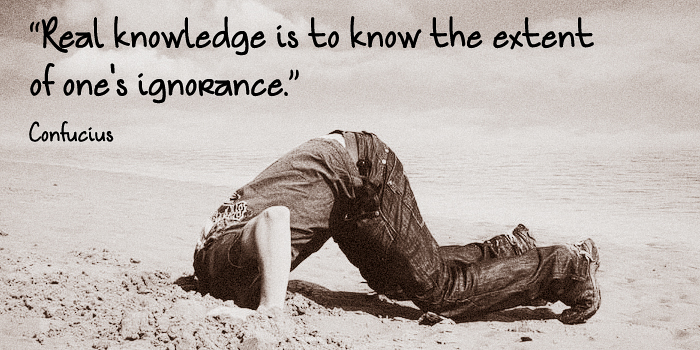
Paying The Price For Ignorance

 
Mr. Justice Robin Camp has resigned. You may remember that Camp is the Alberta judge who wondered why a woman who appeared in his courtroom -- alleging that she had been sexually assaulted -- couldn't keep her knees together. He recently underwent a "re-education" regime. Gerry Caplan writes:

Since the rape trial at which he presided so ignorantly, many had argued for the need to educate Mr. Camp in the ways of women and the world. Several feminist scholars were even brought in to give him what was called “in-depth counselling” – a kind of crash course, I guess, on modern women. Three of them decided that he was genuinely interested in changing.

The same goes for his colleague in Halifax, Judge Gregory Lenehan, who in his recent ruling on a sex assault case said “a drunk can consent.” Right. Even when they’re found unconscious in the back of a cab and had peed themselves.

Who are these judges? Have they been on Mars? Do they represent the male judges at the pinnacle of our criminal justice system? Were they unconscious while the endless struggle for women’s equality and a woman’s right to be respected played out as front-page news?

Both men are not uneducated. But both men are ignorant. Caplan argues that the antidote for ignorance is paying attention: 

Justice Camp was a university graduate; a well-paid professional. We have the right to expect judges like him to be aware of their surroundings. Of basic morality. When asked why his cabinet was gender-balanced, the Prime Minister said, simply, “Because it’s 2015.” Everyone, but everyone, knew what he meant. No special courses were required by anyone.

It's not just judges. Lots of folks are simply not paying attention. And there is always a price to be paid for ignorance.

Image: Trading Street